• Member Login
  • Shopping Cart Shopping Cart
    0Shopping Cart
Oregon Seed Association
  • About Us
    • Members
    • Why Become a Member?
    • Officers & Board of Directors
    • Bylaws
    • Code of Ethics
  • Events
    • Events Calendar
    • Mid-Winter Meeting
    • Summer Convention
    • Cool Season Grass Workshop
  • Resources
    • OSA Seed Labeling Database
    • Seed Testing Labs
    • OSA Seed Lab Update
    • News
    • Legislative Reports
    • Palmer Amaranth
    • Industry Links
    • Commonly Used Acronyms
    • Stewardship Policy
  • Sponsors
  • Scholarship
    • Scholarship Award Recipients
  • Contact
  • Careers
    • Job Posts
    • Create a Job Post
    • Resume Posts
    • Create a Resume Post
  • Menu Menu
You are here: Home1 / OSA Updates

Sharon Davidson shares the story behind Agri Seed Testing seed lab, the realities of seed testing, and why partnership with OSA has made a difference.

February 27, 2026

For more than four decades, Agri Seed Testing has played an important role in Oregon’s seed industry. By providing detailed, accurate analysis, testing their work supports seed quality standards, ensures that grower-company contract specs are met, and guides the best use of individual seed lots before they enter the marketplace.

Founded in May of 1983 by Sharon Davidson, RST, Agri Seed Testing specializes in agricultural seed testing services, including purity, germination, tetrazolium, ploidy, and other quality characteristics.

Davidson’s path to ownership began after earning her Registered Seed Technologist (RST) status while working in Arizona. Encouraged by her father to return home to Oregon, she launched Agri Seed Testing with family support and initially operated as a wholly owned subsidiary of RD Farms. She began in a 1,000-square-foot leased space. Within seven years, she purchased and renovated her first building into a dedicated seed lab. A decade later, continued growth led to the addition of a second facility, bringing the operation to a total of 7,000 square feet.

While many people assume seed testing is automated, the work remains highly hands-on. Each seed in a purity test is examined individually. Each sprout in a germination test is evaluated by a trained analyst. The lab’s report of analysis is often the deciding document in buying, selling, and shipping seed, so accuracy is critical. Although seed testing may be one of the least compensated roles in the production chain, it produces one of the most important documents in any transaction.

Workforce development is one of the company’s biggest challenges today. The work is detailed and methodical, and it takes patience and a genuine passion for seeds. Hiring at high wages is not always possible, so finding and keeping employees who truly care about the work is essential. Davidson also notes that putting a RUSH on a test does not actually make results come faster; it just puts the lab further behind on other tests. Each evaluation takes time and attention, and quality cannot be compromised.

Looking ahead, Davidson expects there may be fewer seed labs in the future. While artificial intelligence may assist with certain processes, she believes trained professionals will still be needed to evaluate final results. As the industry evolves, maintaining strong training and expertise will remain important.

Agri Seed Testing has been part of the Oregon Seed Association since before it was even called the OSA. As a Gold Sponsor and Associate Member, the company views its involvement as a true partnership. Over the years, the OSA’s support in addressing testing rules and seed law considerations has helped strengthen both the business and the broader seed community.

Reflecting on her career, Davidson describes it as a fabulous journey. From a farm girl in St. Paul to the founder of a respected seed lab, she credits the Oregon seed community and the OSA for believing in her vision and supporting the work that helps keep Oregon seed moving around the world.

https://oregonseed.org/wp-content/uploads/2026/02/Agri-Seed1.jpg 737 713 Admin https://oregonseed.org/wp-content/uploads/2025/04/osa-logo.png Admin2026-02-27 12:19:032026-02-27 12:22:34Sharon Davidson shares the story behind Agri Seed Testing seed lab, the realities of seed testing, and why partnership with OSA has made a difference.

Double River Forwarding Navigates Global Events to Deliver Seed For the World

September 25, 2024

As the owner of a small freight forwarding and logistics company based in Portland, Tina Lyons is always keeping a close eye on the news.

Global events can have a major impact on her clients and business. Lately, she’s been monitoring conflict in the Red Sea that has led to reduced ship traffic through the Suez Canal for fear of attacks. That means more vessels and more cargo are having to travel longer distances before reaching their final destination.

“It would be nice to take a news break, but I can’t,” said Lyons, of Double River Forwarding LLC.  “World peace would really help a lot.”


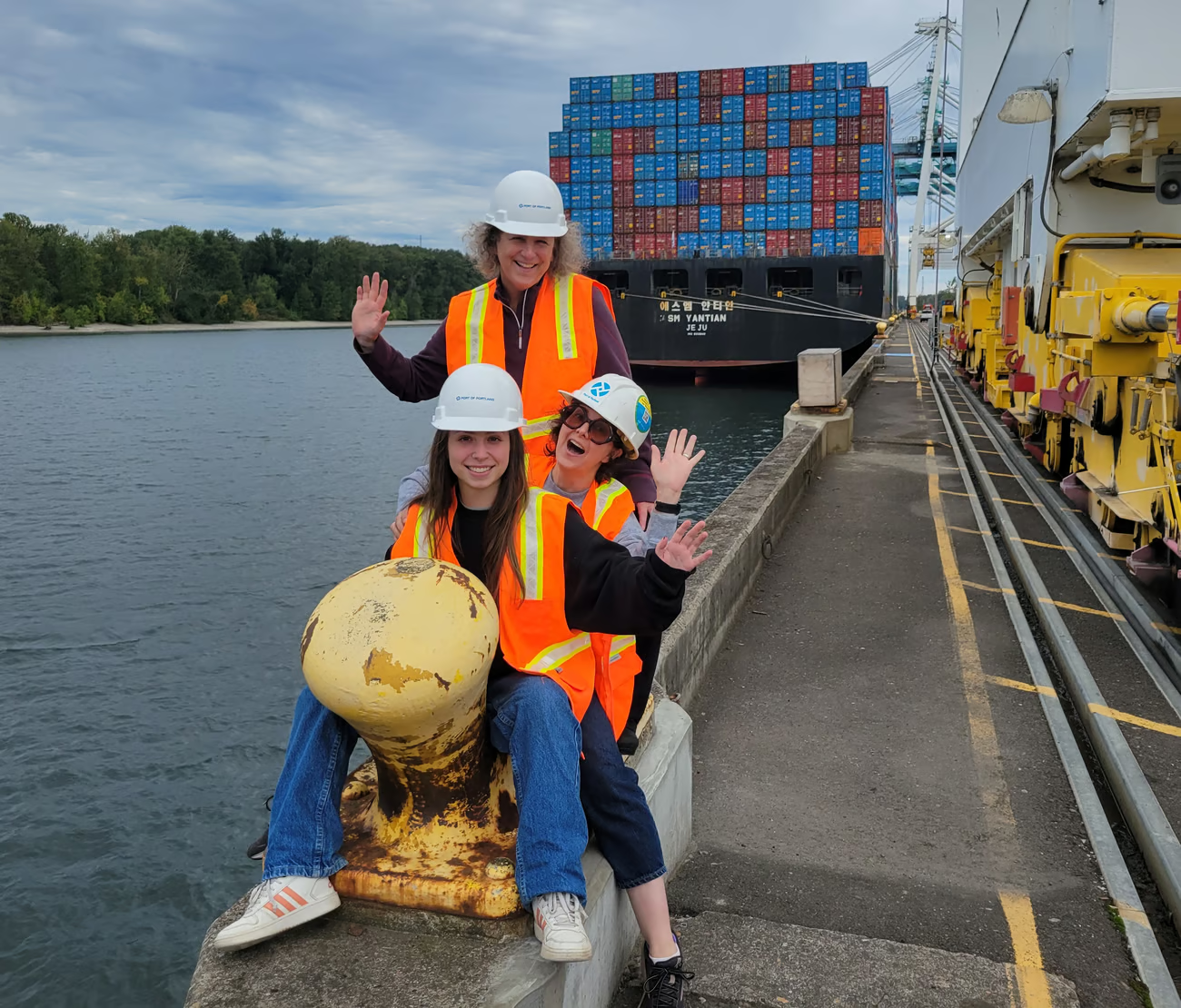
Tina Lyons, back, waves in front of a container vessel with employees Josephine Lyons and Jennifer Dawkins.


Lyons founded Double River in 2008. She previously spent 16 years in the commodity trading and freight forwarding industry before striking out on her own. The company’s name refers to the convergence of the Willamette and Columbia rivers in north Portland.

Double River specializes in shipping agricultural products around the world, including wheat, corn, hazelnuts, and grass seed. Lyons estimated as much as 90% of their clients are farmers. The company handles bookings with shippers, documentation, and other services to ensure these products get from Point A to Point B.

“I like to help people, and I like to make people happy,” Lyons said.

Export challenges

Lyons joined OSA as an associate member in 2020, right as the COVID-19 pandemic was beginning to cause major supply chain disruptions.

The biggest benefit, she said, has been developing close relationships with seed producers. Those connections have allowed her to learn more about the Oregon seed industry, and also share with OSA members what issues are affecting exports.

“Sometimes you have to explain broader issues as to why their cargo isn’t getting to (its destination),” Lyons said. “It can be really hard to explain that to people. Customers’ heads aren’t in this all day long. They’re just trying to sell their products.”


An ocean vessel loaded with containers. (Source: Wikipedia)


For example, Lyons said the COVID-19 pandemic threw shipping schedules into chaos. Bookings aboard vessels were difficult to find, and constantly changing. Even finding empty containers for exports was difficult — shipping lines were instead sending empty containers back to places like China to fill with higher-priced imports, essentially leaving exports behind with nowhere to go.

Things haven’t gotten much easier in the years since pandemic lockdowns. Russia’s invasion of Ukraine and the conflict in Gaza have altered shipping routes, leading to greater congestion at European ports. Ship traffic was also recently restricted through the Panama Canal due to drought, resulting in another bottleneck.

It is up to Lyons and her team to help customers navigate these complex challenges.

“It’s a big wheel,” she explained, “and the cogs aren’t all in the right place right now.”

A team approach

 Lyons has four employees at Double River, including two in their Portland office, one based in Roseburg, and one on the East Coast in Jersey City, N.J.

Together, they move approximately 4,000 forty-foot equivalent containers worth of cargo every year. A forty-foot equivalent container, or FEU, measures 40 feet long, 8 feet wide, and 8 feet tall. For all 4,000 FEUs, that adds up to about 100,000 metric tons of goods.

Oregon grass seed goes all over the world, Lyons said. She can take out a globe and start pointing to every country where Oregon seed is sold, beginning with Tasmania. By the time she gets to Egypt, people usually get the point, she said.

Shipping grass seed does come with its own set of unique challenges. Import restrictions tend to be higher, Lyons said, and testing requirements are more stringent.

Freight forwarding and logistics can be a stressful job, Lyons said, with all the uncertainty caused by factors outside of their control.

“Luckily, we have awesome customers,” she said. “It helps to ease everything.”

Interested in contacting Double River Forwarding LLC? Click here to learn more!


The Double River team — Tina Lyons, Jennifer Dawkins, and Josephine Lyons — gathered with their significant others. 

https://oregonseed.org/wp-content/uploads/2024/09/e3079c09-d65b-45e6-ad51-68fe501eeddf-1030x879-1.jpg 683 800 George Plaven https://oregonseed.org/wp-content/uploads/2025/04/osa-logo.png George Plaven2024-09-25 09:28:502025-04-21 18:27:31Double River Forwarding Navigates Global Events to Deliver Seed For the World

Turfgrass Field Day Digs Into Latest Research

September 5, 2024

Researchers at Oregon State University’s turf management program held their annual Turfgrass Field Day Aug. 29 at the Lewis-Brown Farm near Corvallis, providing updates on several projects related to pest control, winter injury, carbon sequestration, and more.

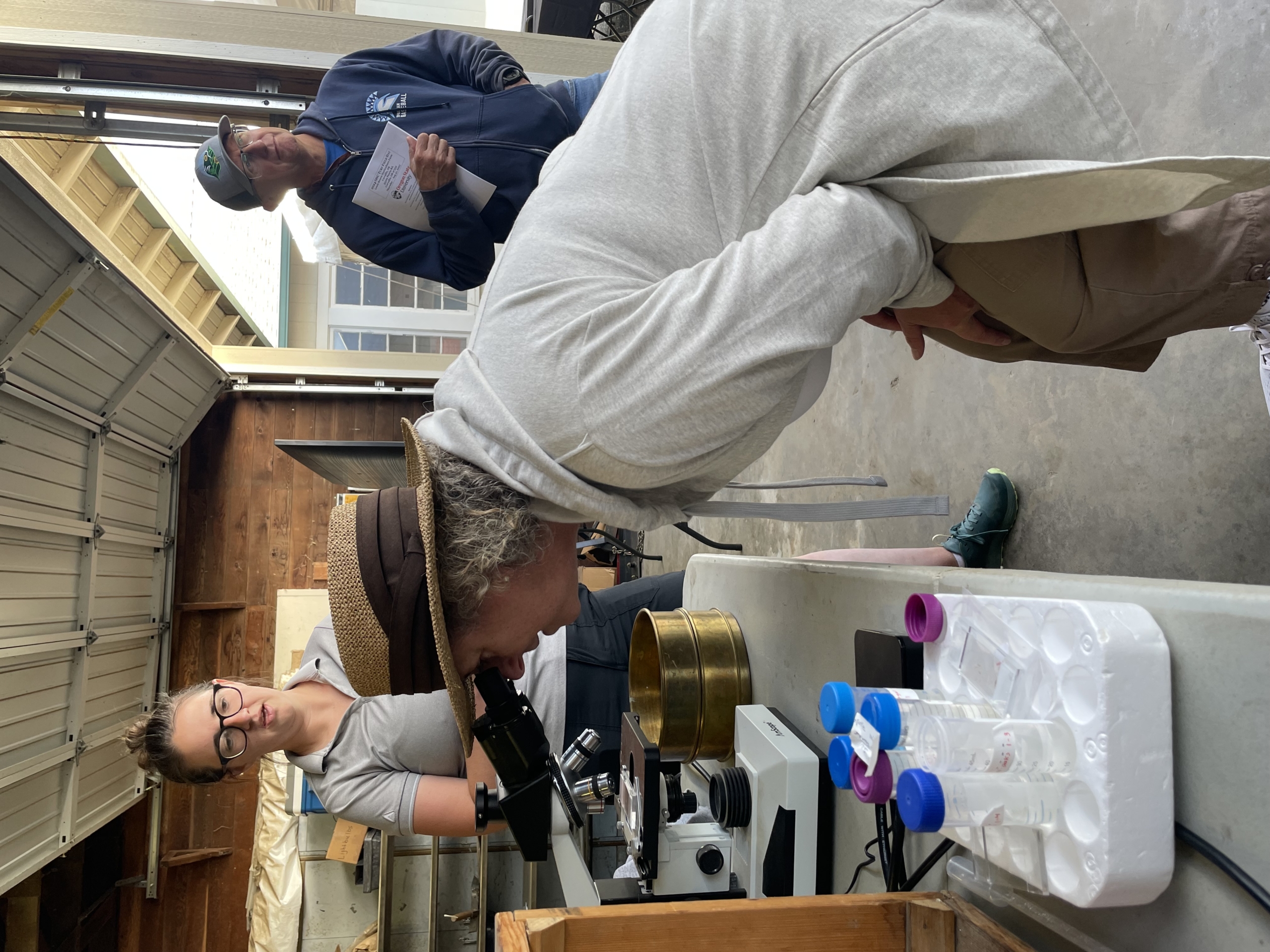
The morning began with a series of short presentations before moving to field tours and an open house, where attendees strolled past verdant putting greens, lush fescue trials, and could even glimpse tiny nematodes through a microscope.

Field tours included fungicide, herbicide, and irrigation efficiency studies, along with perennial ryegrass trials conducted with the National Turfgrass Evaluation Program (NTEP)  and fine fescue trials conducted as part of the Alliance of Low-Input Sustainable Turf.

Chas Schmid (right), senior researcher with the OSU BeaverTurf program, discusses topdressing treatments for golf course putting greens during the annual Turfgrass Field Day on Aug. 29.


Alumni and Friends


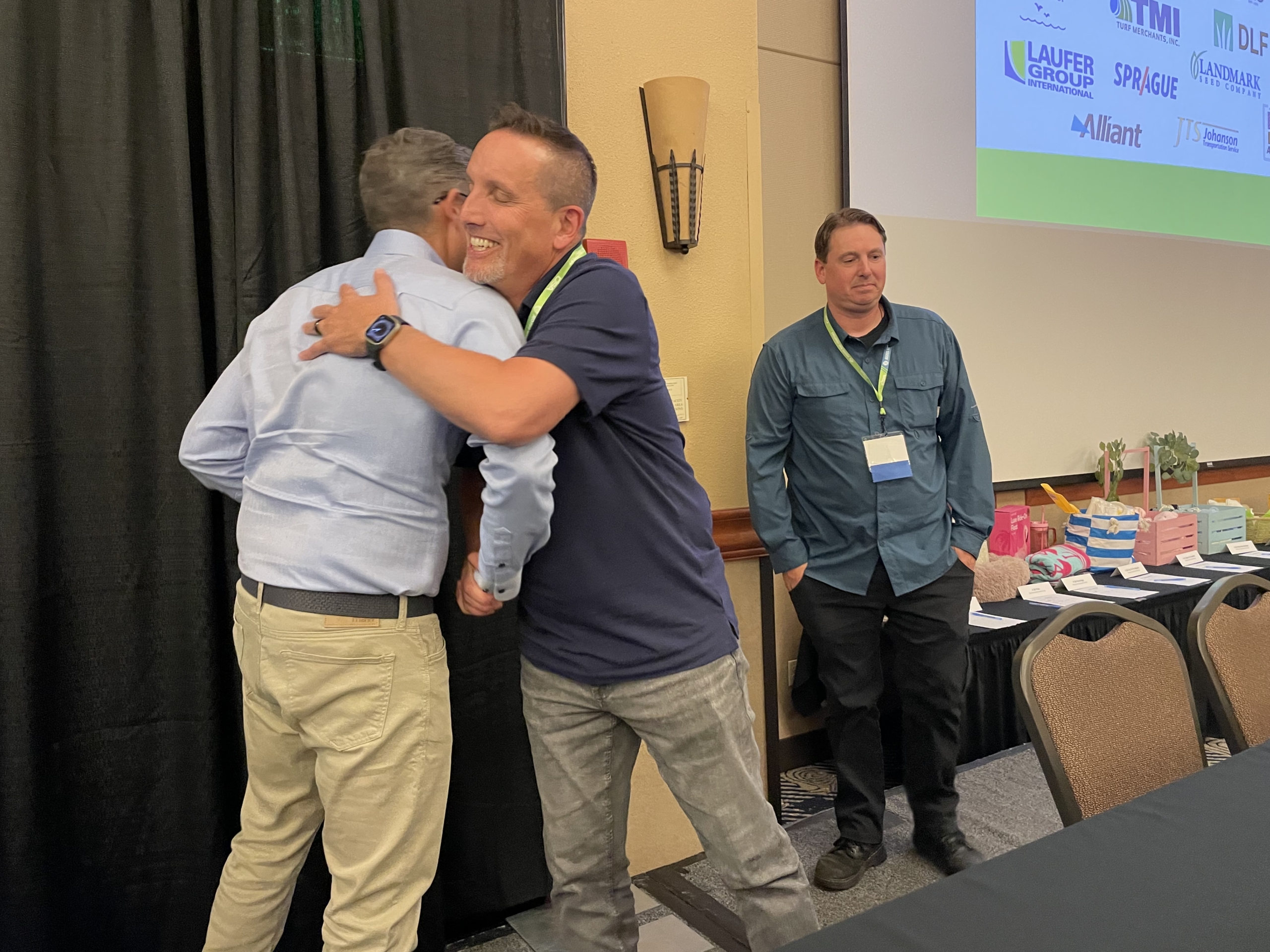
Two industry leaders were presented with Alumni and Friends awards from OSU BeaverTurf, recognizing their contributions to the turfgrass industry.

Sally Cheyne, Executive Director of the Oregon Turfgrass Foundation, and David Phipps, Northwest Field Staff Representative for the Golf Course Superintendents Association of America (GCSAA), were presented with the awards by Alec Kowalewski, Professor and turfgrass specialist for OSU.

OSA offers our congratulations to Cheyne and Phipps! Thank you for your incredible support of Oregon seed and turfgrass producers.

David Phipps and Sally Cheyne received Alumni and Friends awards from OSU BeaverTurf.


Diagnostic Lab Update


Chas Schmid, an assistant professor at OSU and senior researcher with the BeaverTurf program, gave an update on the university’s Turfgrass Diagnostic Lab.

Schmid said they are seeing an uptick in samples this summer with the diseases Pythium root rot and summer patch. Over-watering and over-fertilizing — particularly after periods of drought and going into hot weather — are a “recipe for disaster” for Pythium, he said.

The turfgrass team is also working with the U.S. Golf Association on a $30 million initiative to reduce water consumption by 45% over the next 15 years. As part of that effort, Schmid said they are experimenting with the height and angle of irrigation heads to see if they result in greater efficiency.

“Hopefully we’ll have some answers for you next year,” Schmid said.

Winter Damage


Two separate projects are underway at BeaverTurf examining winter damage at golf courses in Central Oregon, as well as damage caused by foot and cart traffic during frost.

Cole Stover, a graduate assistant at OSU, is leading the work in Central Oregon. For three years between 2021 and 2024, he flew a DJI Inspire 2 drone equipped with a multispectral camera and thermal sensor over four golf courses near Bend. Flyovers were done monthly from December 2021 through May 2024 to monitor winter damage.

The DJI Inspire 2 drone was used to survey winter damage on four golf courses near Bend.


Results showed that surface temperature data could be used to predict areas of turf damage in spring. Damage is more likely to occur at minus-8 degrees Celsius, Stover said.

Stover also suggested it may be best to leave snow in place rather than remove it on golf courses, unless there is a chance it could thaw and then re-freeze forming a layer of ice.

Alec Kowalewski, professor and turfgrass specialist with BeaverTurf, led tests last year to determine whether foot and cart traffic caused damage during frost on golf courses. According to his study, frost was observed each morning from Jan. 30 to Feb. 13.

Results of the study, funded by the USGA, showed foot traffic did not cause significant damage to annual bluegrass putting greens. However cart traffic did cause “unacceptable” damage on taller bentgrass fairways.

“If it is a frozen morning, you should not have carts on the golf course for the entire day,” Kowalewski said.

Nematode Surveys


Emily Braithwaite, a graduate assistant at OSU, said surveys are showing increasing concentrations of microscopic nematodes in turfgrass across the Pacific Northwest.

The parasitic worms are harmful because they feed on the roots of grass, causing damage.

“Nematodes are much more widespread than we initially thought,” Braithwaite said.

Tina Lyons, owner of Double River Forwarding in Portland, observes nematode samples through a microscope at OSU Turfgrass Field Day on Aug. 29.


Example of a root-knot nematode. (Source: Center for Invasive Species and Ecosystem Health)


The survey, funded by the USGA, identified 15 unique types of nematodes in turfgrass, versus just 1-2 in crops such as soybeans. Damage was primarily observed from January through March, during periods of reduced growth.

Braithwaite said the next step is finding best management practices such as optimized spraying to keep the tiny parasites under control.

Carbon Sequestration

Zach Hamilton, a graduate assistant, discussed how grass length and frequency of mowing impacts the amount of carbon the plants are able to sequester.

Hamilton conducted research in a 40-year-old turfgrass stand at Lewis-Brown Farm, collecting data every two weeks from January 2021 through December 2022. He evaluated the photosynthesis of grass mowed at different lengths and intervals, including 5 centimeters monthly; 5 centimeters weekly; and 10 centimeters weekly.

Preliminary findings show the higher-cut grass sequestered more carbon, but with greater mowing frequency came greater carbon emissions, potentially offsetting the storage. Hamilton added that younger grass stands could have the ability to sequester more carbon underground.


Sunlight shines on a putting green at Lewis-Brown Farm near Corvallis.

https://oregonseed.org/wp-content/uploads/2024/09/Schmid_tour-scaled.jpg 1920 2560 George Plaven https://oregonseed.org/wp-content/uploads/2025/04/osa-logo.png George Plaven2024-09-05 09:31:372026-02-27 12:01:19Turfgrass Field Day Digs Into Latest Research

Columbia River Seed Harnesses Automation, Genetics to Enhance Production

August 26, 2024

While most grass seed produced in Oregon comes from the rainy and fertile Willamette Valley, it is not the only region yielding high-quality seed crops.

Established in 2003, Columbia River Seed supplies Kentucky bluegrass, perennial ryegrass, tall fescue, and fine fescue grown on both sides of the Columbia River in Eastern Oregon and Washington. The company markets its products through a strategic partnership called Columbia River Basin Seed Trinity, formed in 2023 with Riverview Seed Co. based in Hermiston.

“We’ve transformed from just third-party multiplication and selling seed to a wholesale customer, to now we’re a value-added business,” said Cody Gyllenberg, Operations Manager for Columbia River Seed. “We grow seed, we blend seed, we market seed … we have customers across the globe that all require different things.”


Cody Gyllenberg (right), Dallin Iverson (Field Manager, left), and Jory Iverson (Seed Stock Manager, center) planting observation plots at Columbia River Seed.


Being situated in the heart of the Columbia Basin comes with its own set of unique challenges. For starters, the climate is much drier, meaning access to irrigation is critical. Secondly, most farmers grow grass seed secondarily as a rotation crop between plantings of higher-value vegetables like potatoes and onions.

In order to make grass seed economically competitive, Gyllenberg said Columbia River Seed has leaned heavily into automating its cleaning and packaging facilities in Plymouth, Wash., and testing newer, better-performing varieties.

Along with automating its cleaning and packaging lines, growers for Columbia River Seed are also experimenting with laser-fired weeders in place of hand-rogueing crews to save on labor.

“I’ve done the math,” Gyllenberg said. “Let’s put it this way — as expensive as (automation) is, we can justify it in a few years just on our labor costs.”


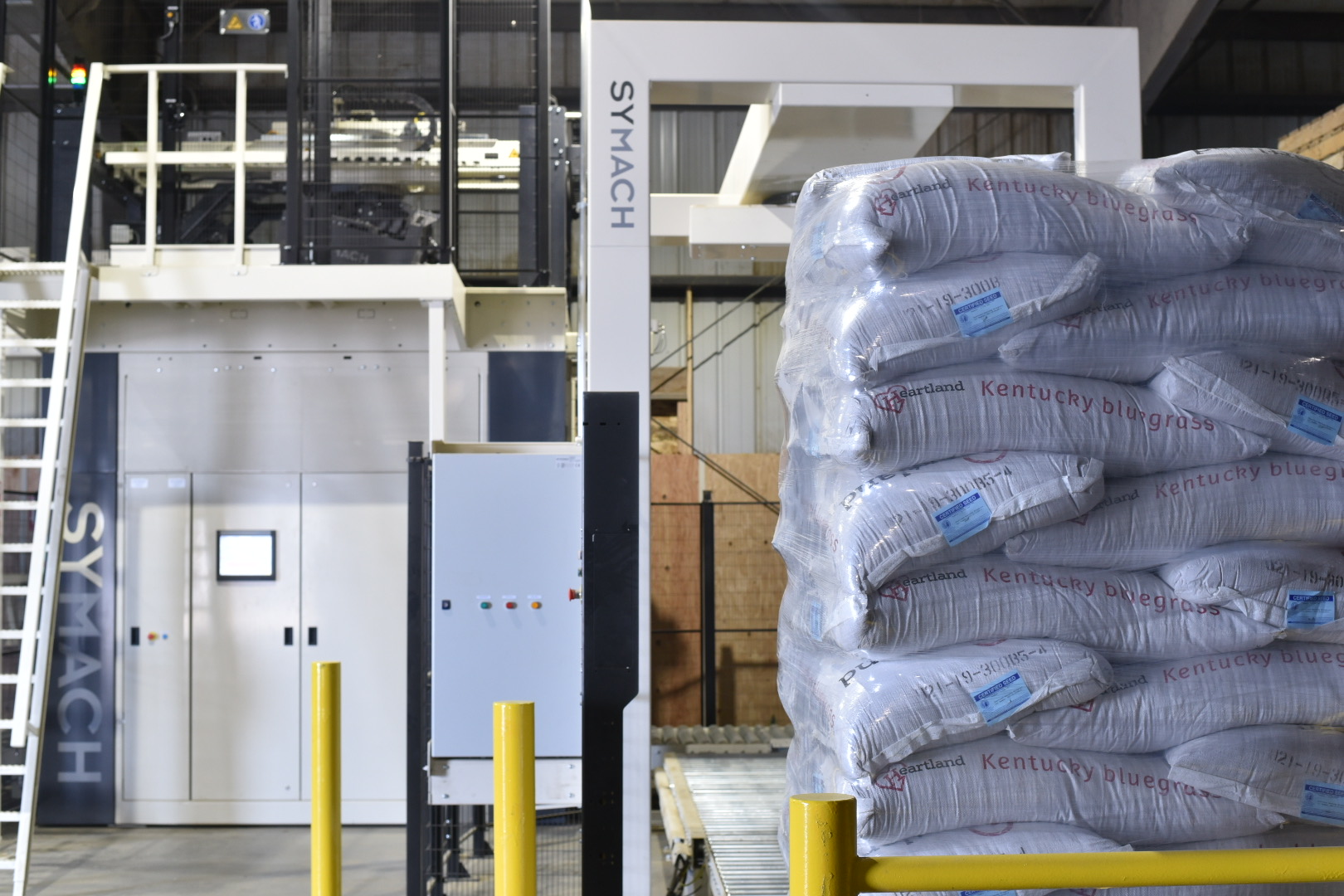
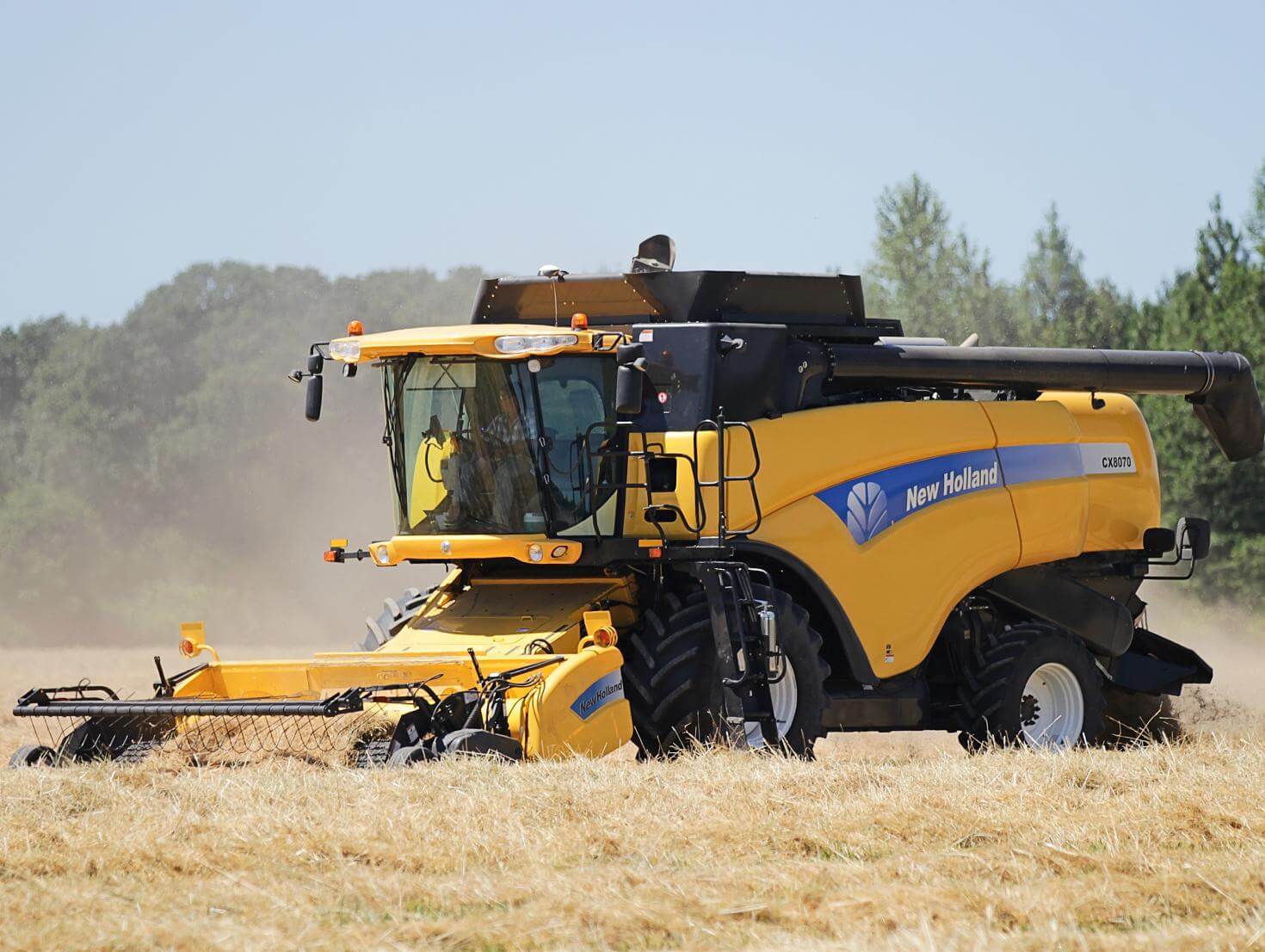
Packaged bags of Kentucky bluegrass are ready to ship at Columbia River Seed in Plymouth, Wash.


Law of Constant Misery

Gyllenberg, who graduated from Washington State University with a degree in agronomy, has a special passion for plant breeding.

Columbia River Seed works closely with the Willamette Valley-based Novel AG Inc. to do variety development. Novel AG tests thousands of grass cultivars, paying close attention to qualities such as wear-tolerance, early spring green-up, and post-harvest dormancy. Only a small fraction will make the final cut.

“We do have some new varieties that are pushing the envelope very hard, and that we’re excited about,” he said.

Plant breeding is both a science and an art, Gyllenberg said. Sometimes, a variety produces excellent yields but is lower in turf quality. Other times, the turf quality is superb, but yields aren’t up to par.

Gyllenberg calls it “the law of constant misery.”

“We try not to aimlessly release varieties,” Gyllenberg said. “As any good business grows and develops, you try to refine the tip of your spear, and you’re picking things that are not just another option, but always a better option.”


A field of Sierra Vista Sheep Fescue grows in the Columbia Basin.

Industry Unity

Columbia River Seed has been a member of OSA since its founding, which Gyllenberg said has provided a fantastic outlet to connect with industry partners and develop working relationships.

Though the seed industry is diverse, Gyllenberg said OSA should be the glue that holds everyone together by uniting around common goals and issues.

“Today’s modern OSA could potentially be a pillar and an innovator in our own right,” Gyllenberg said. “In order to do that, I think it’s key to drive hard on the most important big-picture and philosophical issues that plague our industry. If we can find a way to unite members around those important pillars of ideology, then the smaller issues become less frustrating.

“None of that can happen overnight,” he added, “but if the underlying motif is there, then the roadmap is traversable.”

Want to see more photos and videos from Columbia River Seed? Be sure to check out the company’s Instagram pages, @ColumbiaRiverSeed and @SeedTrinity. For more information or to contact Columbia River Seed, click here.

The 2024 grass seed harvest is mostly complete for Columbia River Seed in Eastern Oregon and Washington.

https://oregonseed.org/wp-content/uploads/2024/08/Screenshot-2024-08-16-at-11.20.33 AM.png 1136 1680 George Plaven https://oregonseed.org/wp-content/uploads/2025/04/osa-logo.png George Plaven2024-08-26 10:15:592026-02-27 12:02:00Columbia River Seed Harnesses Automation, Genetics to Enhance Production

Justus Bag Co. Named 2024 Associate Member of the Year

July 31, 2024

For nearly 65 years, Justus Bag Co. has been supplying high-quality agricultural packaging for some of the largest grass seed, onion, pulse crop, and livestock feed companies throughout North America.

The third-generation family business, now led by Darin Justus, has locations in Portland and east of Spokane. Bags for clients come in a variety of materials and sizes — everything from paper to polypropylene, and 1 pound up to several thousand pounds.

OSA presented Justus Bag Co. with the award for Associate Member of the Year at our 2024 Summer Convention in June. The company has supported OSA for about three decades, Justus said.

“It was just truly an honor,” he said. “I was very humbled.”

Partners in the Seed Business

Justus Bag Co. was founded by Justus’ grandfather, Roland “Curly” Justus, and his father, Doug Justus, in 1959. Roland had previously gone into business with the Oregon Bag Co., now known as OBC Northwest, in Canby before moving his family to Spokane to start his own company.

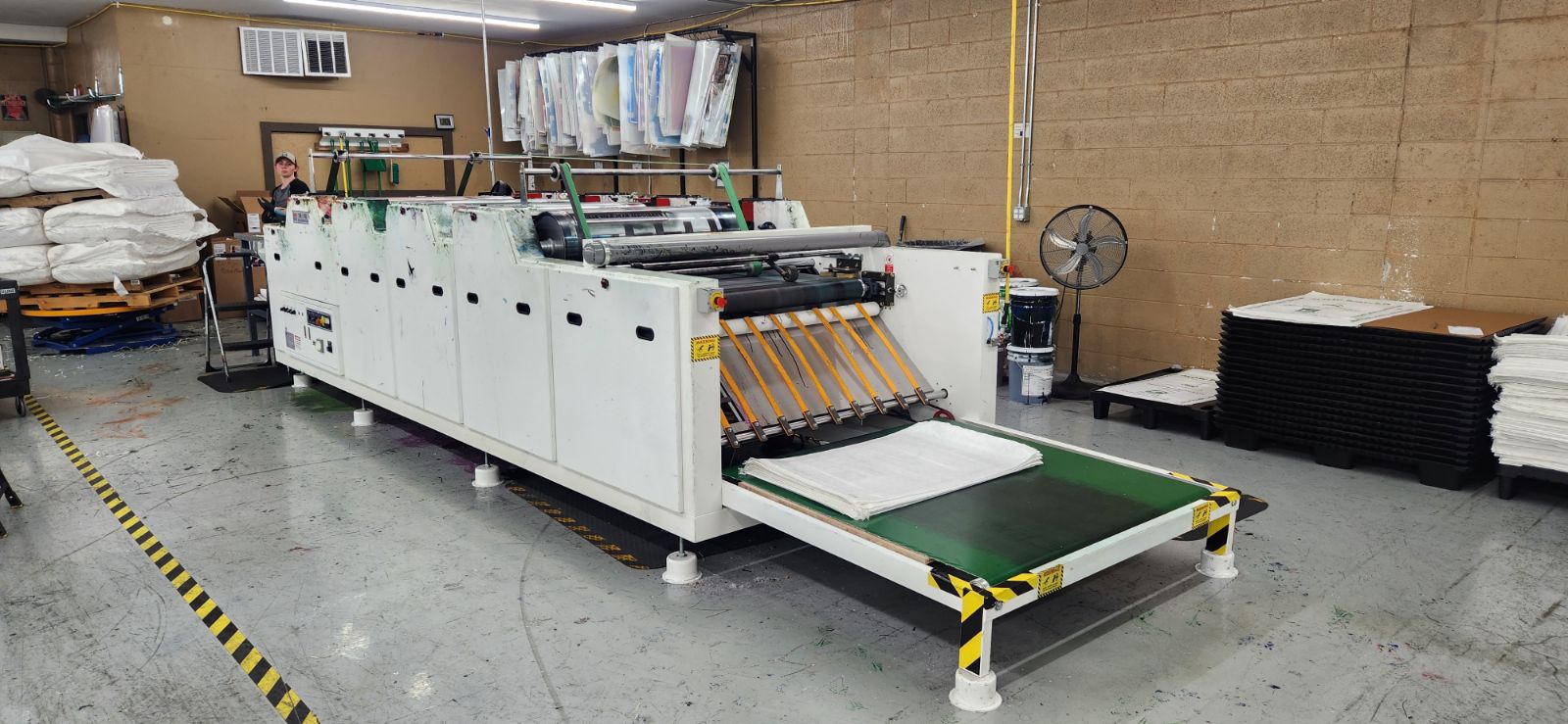
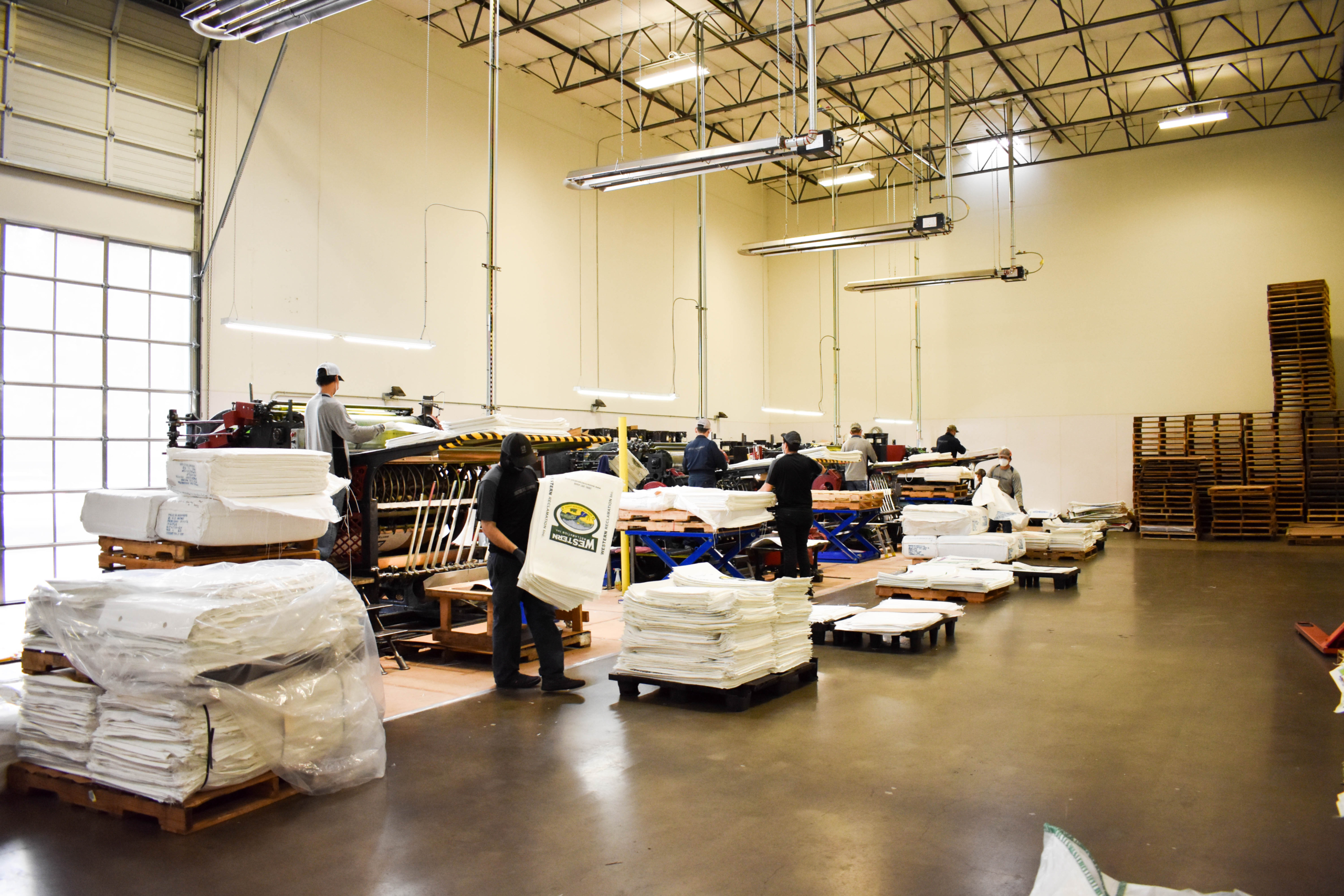
Back then, Justus said they would drive around collecting old used bags, mostly burlap, and bringing them back to their facility where a line of sewers would recondition them to be sold again. Today, bags are made overseas and brought to Justus Bag Co.’s warehouses, where employees hand-feed them one by one through one of nine printing presses.

The company opened its Portland branch in 2008. Together, the facilities employ about 30-35 people, depending on the season.

“Our team on the production line doesn’t get enough credit, because we cannot go out and do what we do without them,” Justus said.

Justus described the grass seed industry as a “vital” component of their business. His favorite part of the job is developing long-lasting relationships with clients, and forging partnerships that benefit and strengthen the agricultural industry as a whole.

“We don’t look at our customers as customers. They’re more partners with us in business,” he said. “That really is the most important part of our business, is building these relationships, these friendships and partnerships, that hopefully last a lifetime. Once you have that, it’s easier to work together on issues.”

Supporting OSA and the Community

A lot of that industry networking and relationship-building happens through OSA, Justus said, which is a big reason why he continues to support the association.

“We only thrive in this industry because of the people we’re dealing with in OSA,” he said. “It’s a good group of people, it’s a great organization, and it only gets better for us every year with them.”

Justus Bag Co. also supports several other community organizations, including Cancer Can’t, a Spokane-area nonprofit dedicated to assisting people fighting cancer. The group was founded by Jonathan Van Keulen and his wife, Becky, after Jonathan was diagnosed with bone cancer. Jonathan’s father, John, is a sales manager for Justus Bag Co.

The 10th annual Cancer Can’t Gala is scheduled for Sept. 21 at the Spokane Convention Center, with Justus Bag as an event sponsor.

“That’s probably one of the biggest highlights for us, is that organization,” Justus said.

Upon receiving the Associate Member of the Year award from OSA in June, Justus said it took everything he had not to get emotional in front of everyone.

“We only get that award because of the people in this industry,” he said. “We’re very fortunate and grateful that most of these companies that we’re dealing with are loyal clients, loyal partners, and it just makes it a lot of fun.”

Interested in connecting with Justus Bag Co.? Click here.

https://oregonseed.org/wp-content/uploads/2024/07/JustusBag-scaled.jpeg 1707 2560 George Plaven https://oregonseed.org/wp-content/uploads/2025/04/osa-logo.png George Plaven2024-07-31 13:12:572026-02-27 12:02:40Justus Bag Co. Named 2024 Associate Member of the Year

Meet the 2024 OSA Memorial Scholarship Winners!

June 12, 2024

The Oregon Seed Association has awarded its 2024 Memorial Scholarship to six students who have demonstrated excellence in both the classroom and in their communities.

Abigail Hauke, Brandon Withers, Sofia Vachter, John Cavill, Alayna Grunerud, and Ethan Hedgpeth will each receive $1,500 from OSA to further their education. They were selected based on several criteria including academic history, involvement in extracurricular activities, and community service.

“We had a tremendous pool of applicants, and each was more than deserving of this award,” said Chase Cochran, OSA Scholarship Committee Chair.”Everyone at OSA offers our congratulations to this year’s winners. The future is incredibly bright for our industry and beyond.”

Learn more about this year’s winners by reading their bios below!

Abigail Hauke

Abigail graduated this year from Harrisburg High School with a 3.8 grade point average. She plans to enroll this fall in the Aviation Program at Rocky Mountain College in Billings, Mont., in hopes of one day becoming an airline pilot. “This has been my dream ever since my first time flying,” she said. Over the last five summers, Abigail has worked as a combine driver for local farms in Linn County. In high school, she was Senior Class President and Vice President of the local National Honor Society chapter. Jamie Tatum, a teacher in the Harrisburg School District, described Abigail as a “natural leader,” adding that, “Although undoubtedly Abby will go on to be extremely successful in her chosen endeavors, I am most proud of her for her humanity and heart to support others while her actions make our world a better place, each and every day.”

Brandon Withers

Brandon is no stranger to Oregon agriculture. He has spent the last four years working directly with local farms, including two summers at Doerfler Farms, two years at Pratum Co-op, and one fall season at AgriSeed Testing. “These opportunities have given me experience in production, harvesting, research, cleaning, packaging, field scouting, precision ag (with drones), soil, tissue, seed sampling, and laboratory quality testing,” he said. “Based on these experiences, I have developed a strong passion for agriculture and am planning a career as a Crop Advisor.” During COVID, Brandon started his own woodworking business where he made and donated American flags. He completed his Associate Degree and Crop Health Certificate at Chemeketa Community College in June, and will attend Oregon State University to pursue a bachelor’s degree in Crop and Soil Science. His mother, Karen Withers, is the owner of AgCultured Consulting.

Sofia Vachter

Sofia is a freshman at Oregon State University as a dual-enrolled student with Linn-Benton Community College. She plans to earn her degree in business administration, with a minor in marketing. A graduate of North Marion High School, Vachter participated in the Future Business Leaders of America, National Honor Society, and was a varsity four-sport athlete in track and field, swimming, softball, and soccer. She has previously worked as a farmhand, and her father, Craig Vachter, works at Marion Ag Services. “As I have gotten older, I am very grateful that I started working when I did because it taught me determination, discipline, and developed my strong work ethic,” she said.

John Cavill

John is currently a student at Montana State University-Northern where he is pursuing degrees in Diesel Technology, Agricultural Mechanics, and an academic certificate in Welding Technology. His ultimate goal is to one day run a farm or ranch of his own. “Agriculture has always impacted my life,” he said. “I got my first farm job at 14 years old … I am extremely proud of my work ethic, and I have put many long hours into getting where I am today and closer to one of my life goals.” John comes from Lebanon, and his mother, Laura, has spent nearly 40 years working for DLF USA. He is also a dedicated member of his church, leading Sunday School classes and assisting with middle school youth groups.

Alayna Grunerud

Alayna graduated from East Linn Christian Academy in 2023, where she earned a 4.0 grade point average. She is now attending Grand Canyon University in Phoenix, pursuing a bachelor’s degree in Exercise Science with an emphasis in Sports Performance. She also intends to pursue a master’s degree in Athletic Training. “I have suffered many season-ending injuries in my sports career,” she said. “But it wasn’t until I tore my ACL during my senior of year of high school that I knew athletic training was the career path I wanted to pursue.” Alayna grew up in Brownsville. Her parents, Eric and Nicci Grunerud, both work for Smith Seed Services.

Ethan Hedgpeth

Ethan is currently a senior attending Tri-Cities Prep Catholic High School in Pasco, Wash., where he has played both baseball and football while maintaining a 3.993 grade point average and finishing 130 hours of community service. After graduation, he plans to pursue a degree in Electrical Engineering from either Montana State University or the University of Idaho in hopes of one day owning his own engineering firm. His father, Paul Hedgpeth, works at Columbia River Seed and together they have spent weekends spreading grass seed and fertilizer on the school’s baseball and softball fields, as well as the lawns at their church. Heather Axel, a history teacher and Dean of Academics at Tri-Cities Prep Catholic High School, said Ethan is “no stranger to hard work” and is a “driven, dedicated, and strong young man.”

https://oregonseed.org/wp-content/uploads/2024/06/Graduate-Photos-1210x423-1.jpg 269 770 George Plaven https://oregonseed.org/wp-content/uploads/2025/04/osa-logo.png George Plaven2024-06-12 10:38:352025-04-21 19:47:29Meet the 2024 OSA Memorial Scholarship Winners!

Ampac Seed Co. Provides ‘One-Stop Shop’ for Customers

June 3, 2024

For Joe McAlhany Jr., there’s never a dull moment working in the seed business.


“I love the fact that no two days are ever the same. No two years are ever the same,” said McAlhany, General Manager of Ampac Seed Co. “It’s always fun to see where your products end up, and you really build some good friendships in this business.”


Founded in 1978, Ampac — short for “American Pacific” — produces around 25 million pounds of seed annually, including turfgrass, forage, and cover crops. The company contracts with farmers in Oregon and Canada to grow the seed, which then gets shipped across the country and around the world.

McAlhany has spent more than 20 years working in the industry. His family was one of the primary owners of OreGro Seeds, based in Albany, before selling the company to Nutrien Ag Solutions in 2017. McAlhany joined Ampac in 2021, leading an experienced team of 15 employees.


Whether it’s a soccer field in Australia or a farmer’s field in Kentucky, McAlhany said Ampac strives to be a “one-stop shop” to fill every customer’s needs.


“That’s where we want to be as a seed company, because so many distributors on the other end are reluctant to carry inventory,” he said. “They want to be able to go to one place to buy what they need and then ship it out.”


A Growing Market

Ampac is one of the oldest grower-owned seed companies in the Willamette Valley, McAlhany said. It was originally started by four different growers, though all but one has since moved on, leaving Pugh Seed Farm as the last of the original owners still standing.


McAlhany said the company is “pretty much split 50-50” between turfgrass and forage production. The market for cover crops is especially fast-growing in the U.S., he said, because of their bevy of environmental benefits — everything from improving soil quality and reducing water runoff to sequestering carbon.


“Cover crops are one of those few things where farmers and environmentalists can come together, because there’s so many things they can do for our soil and watersheds,” McAlhany said. “It’s something that we have a passion for, and it’s really just a unique market.”


In some cases, McAlhany said farmers who plant cover crops over a period of years can actually start seeing an increase in their bottom line. According to a USDA survey, corn yields went up 3.1% and soybean yields rose 4.3% after planting cover crops. Naturally healthier soils also mean farmers spend less money on chemical fertilizer, McAlhany said.


Uniting For Solutions


Looking ahead, McAlhany said water is likely to be the biggest issue facing Ampac.


As some areas around the West encourage xeriscaping to save water amid drought, McAlhany said the idea of a lush, green lawn has become like a dirty word in these markets. He said Ampac is working closely with breeders to develop more drought-resistant turfgrass varieties that require less irrigation while providing all the same advantages.


“Then we trial those products in markets where water is the biggest issue. That way, we can see how they’ll be received and how they’re going to be used,” McAlhany said.


McAlhany, who also serves on the Board of Directors for the Oregon Seed Association, said membership in OSA allows companies like his to learn more about complex issues affecting the seed industry and unite for common solutions. One example, he said, is advocating for digital labeling, which he called “a massive game-changer” for the industry.


“We’re heading in a good direction,” McAlhany said. “We’re excited about the future.”

https://oregonseed.org/wp-content/uploads/2024/06/Ampac-Picture-4.jpg 480 640 George Plaven https://oregonseed.org/wp-content/uploads/2025/04/osa-logo.png George Plaven2024-06-03 10:43:132024-06-03 10:43:13Ampac Seed Co. Provides ‘One-Stop Shop’ for Customers

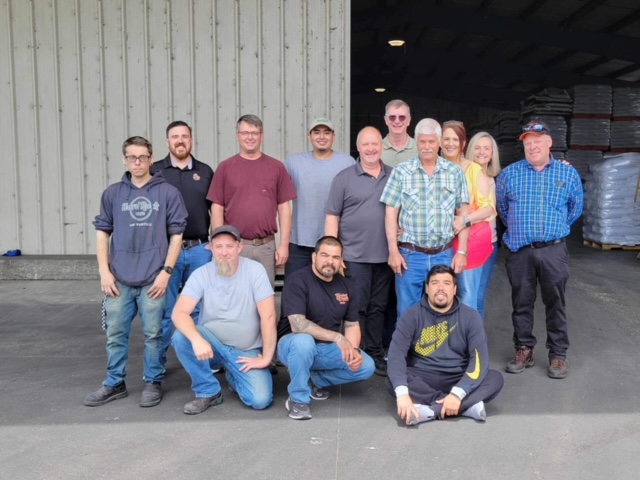
Vertical Integration Key to Success at Mountain View Seeds

April 29, 2024

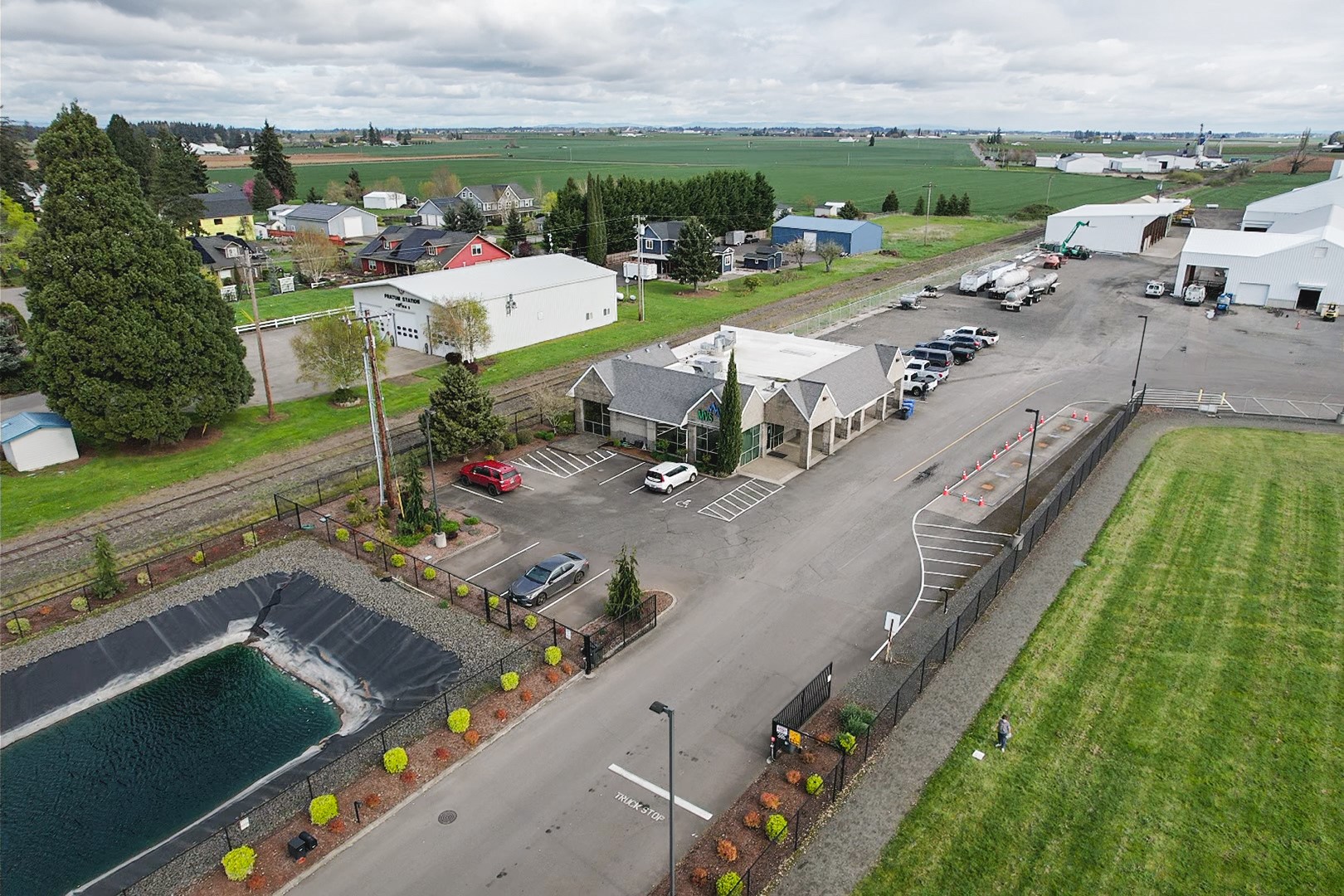
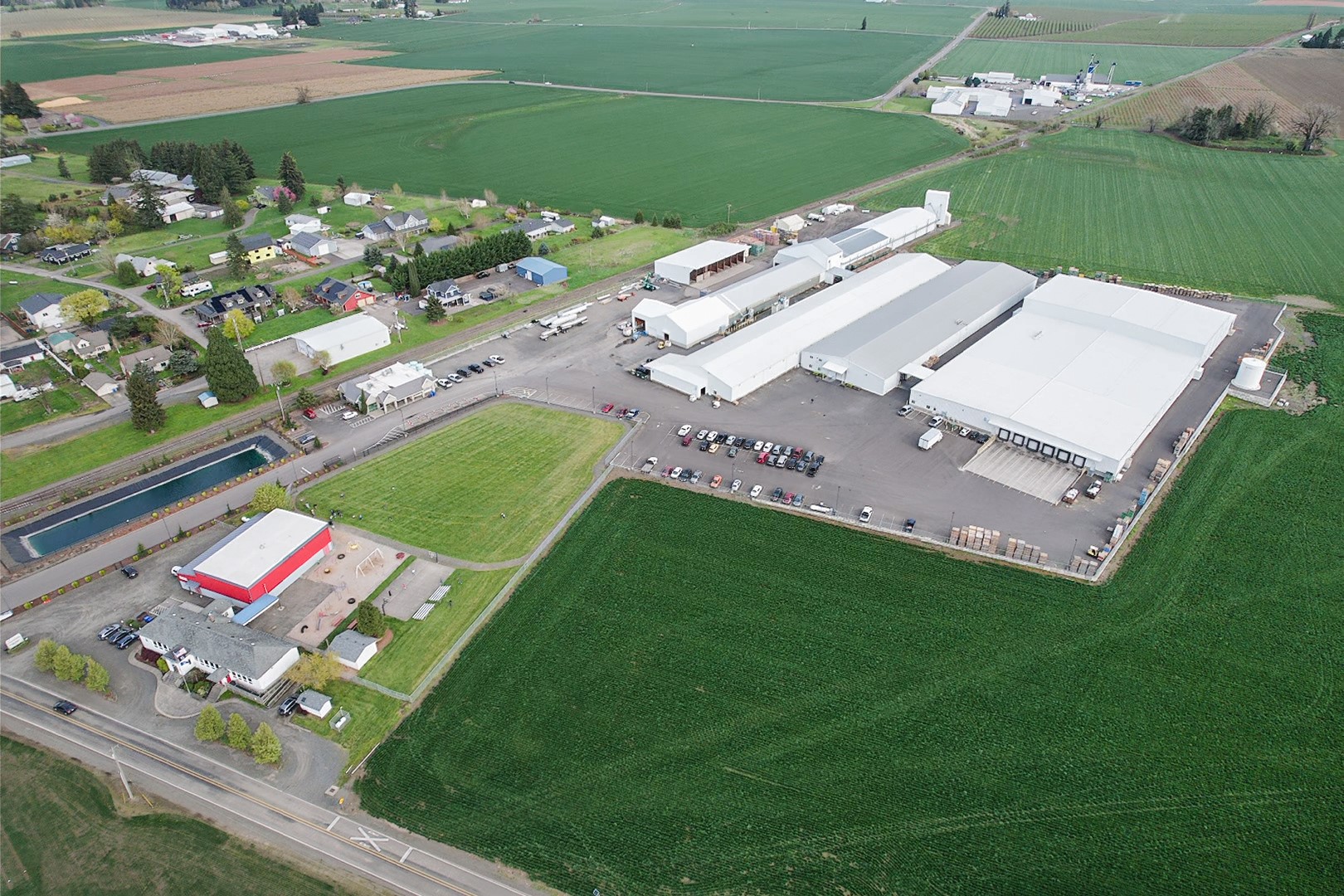
Born out of a co-op in the heart of the Mid-Willamette Valley, Mountain View Seeds has emerged as a top player in the global grass seed market, providing high-quality turfgrass, forage, and cover crops with a focus on environmental sustainability.


Today, the company contracts with more than 200 growers across the Pacific Northwest and sells anywhere from 60-80 million pounds of seed every year. Species include cool-season grasses like kentucky bluegrass, fescue, ryegrass, bentgrass, Bermuda, wildflowers, legumes, brassicas and much more used in lawns, parks, landscaped areas, golf courses, sports fields, and sod farms around the world.

 

Being vertically integrated also allows Mountain View Seeds to have a hand in every step of the process — from being involved in developing varieties, seed processing, and shipping. This offers more guidance and quality assurance from start to finish. Tony Ramirez, accounts manager for the company, said this is what gives Mountain View Seeds a strong foundation.


It just makes our turnaround time quicker and more efficient,” Ramirez said. “We’re able to work closely with our growers to ensure quality and performance standards are met. With our highly efficient automated seed blenders, we are able to ship products in a timely manner”.


Rooted in Oregon


Mountain View Seeds is part of Pratum Co-op, established in 1946 by a group of local farmers cultivating premium grass seed east of Salem. In 1998, Troy Kuenzi and Todd Bond started Mountain View Seeds to handle the rising demand for Pratum’s private varieties.


Though the scope of the business is now global, Ramirez said the company remains dedicated to serving Oregon agriculture. Mountain View Seeds is a supporter of several industry groups, including the Oregon Seed Growers League, Tall Fescue Commission, Fine Fescue Commission, and Annual Ryegrass Growers Association. The company also donates to the annual Oregon Ag Fest, as well as local FFA chapters.


As members of the Oregon Seed Association, Ramirez said the company benefits by being able to network and exchange insights that strengthens the entire seed industry.


“We’re all competitors in the room, but we have common goals,” he said. “It’s a really good place to gain knowledge of what’s happening, especially in a diverse industry such as ours. There are so many different things that go on.”


Fighting for Grass


One of the biggest challenges facing the seed industry, Ramirez said, is fighting against the perception that grass lawns are bad for the environment. In addition to grass’ ability to sequester carbon, improve air quality, and prevent erosion, Mountain View Seeds is constantly working to develop more sustainable varieties that use less water, fertilizer, and pesticides while maintaining quality.


To do this, Ramirez said the company utilizes the Alliance for Low Input Sustainable Turf (ALIST), multiple universities, and other research partners.


“The biggest thing is we do a lot of research and trials to figure out which varieties can have reduced inputs, more heat tolerance, and decreased water use,” Ramirez said. “A lot of it ties into the environment, but it’s also about cost savings in a way where you have fewer inputs, and you’re also doing better by the Earth.”

https://oregonseed.org/wp-content/uploads/2024/04/MVS1.jpeg 1080 1620 George Plaven https://oregonseed.org/wp-content/uploads/2025/04/osa-logo.png George Plaven2024-04-29 11:25:442024-04-29 11:38:45Vertical Integration Key to Success at Mountain View Seeds

Smith Seed Services Offers Full Spectrum of Industry Tools

March 29, 2024

A lot goes into making Oregon’s seed industry renowned worldwide. From breeding quality genetics to seed coating, cleaning, and packaging, producers rely on a bevy of services to help them increase productivity and satisfy customers around the globe.


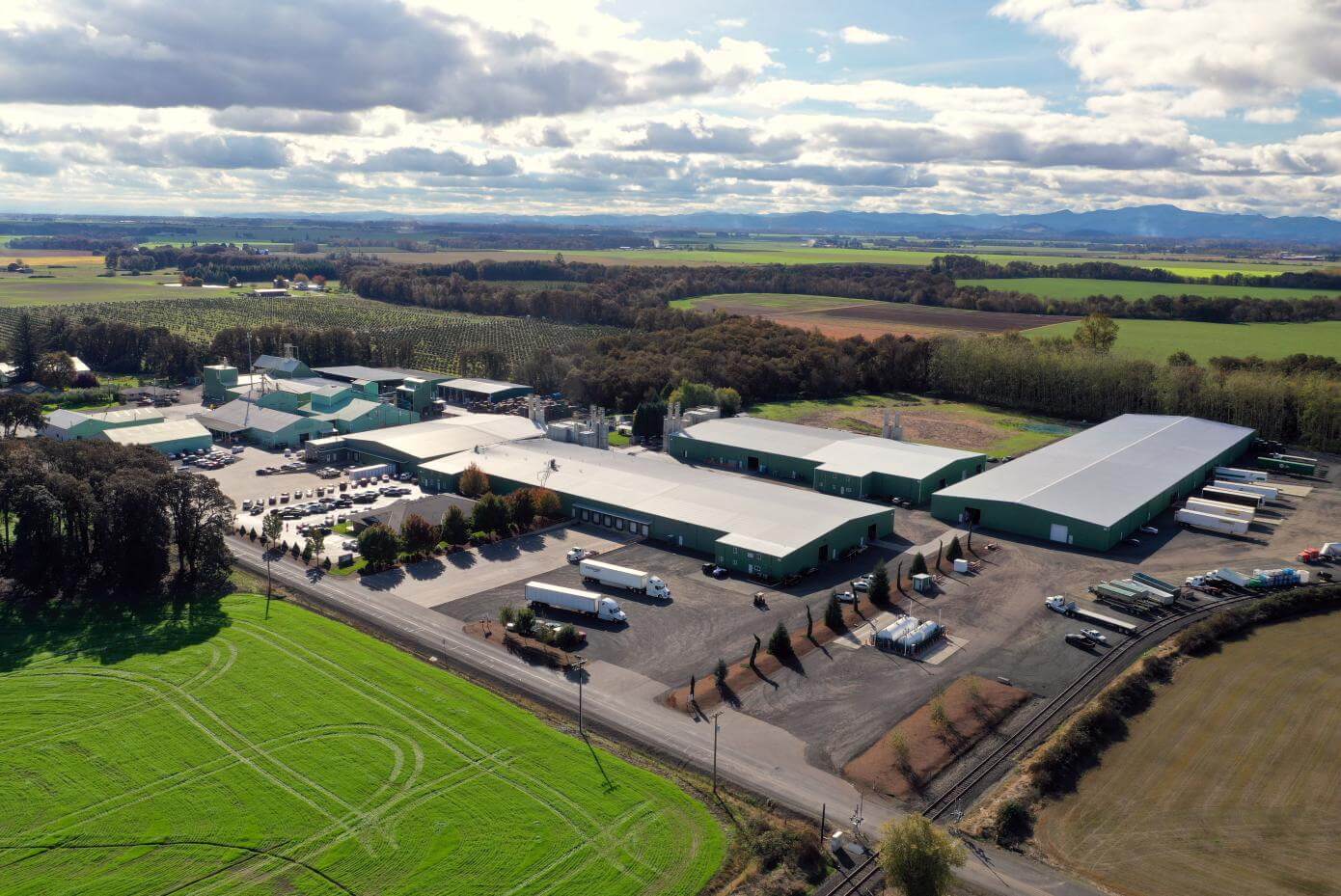
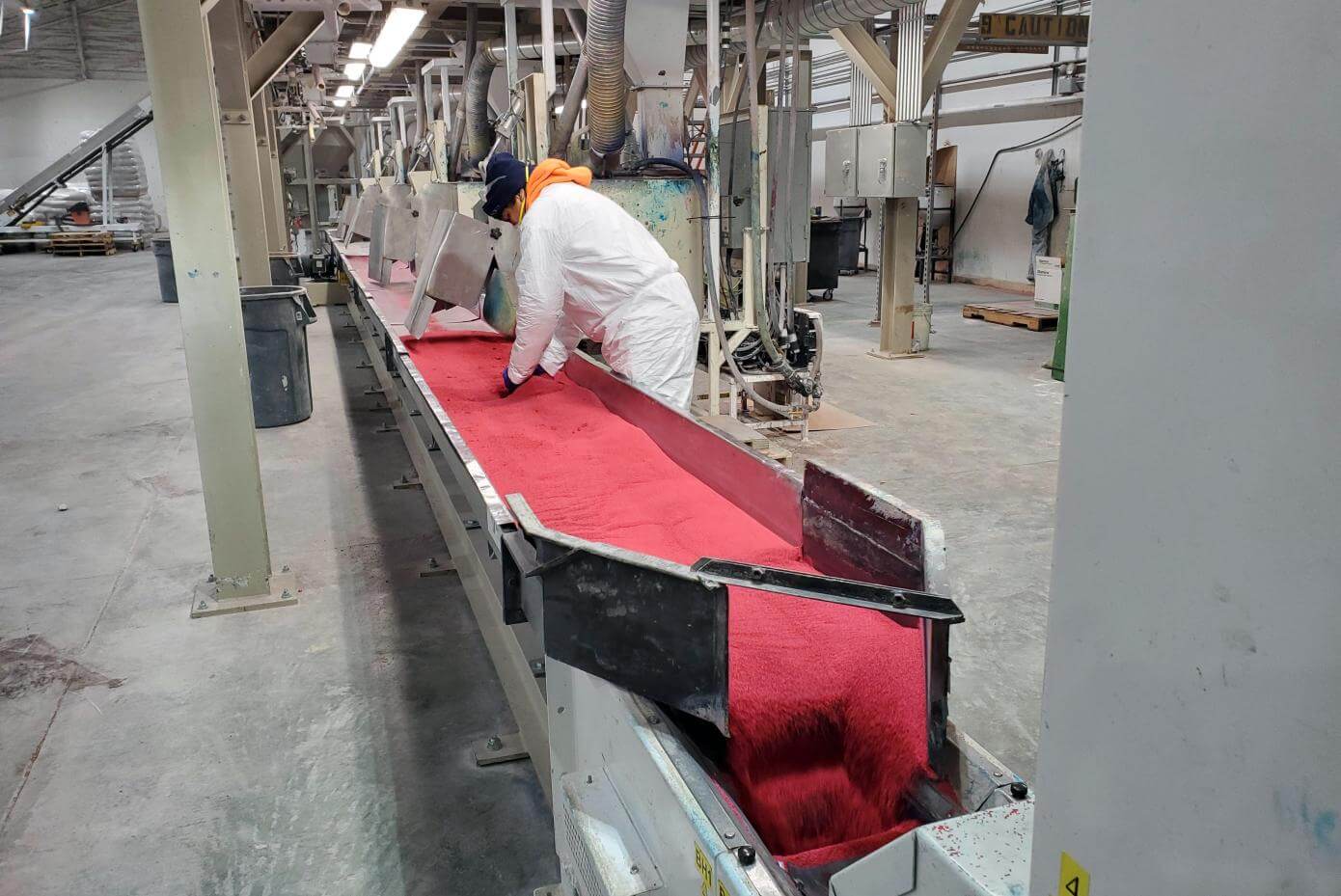
For more than 60 years, Smith Seed Services has been providing the tools that seed growers and distributors need to prosper. What started as a small seed cleaning operation working out of a converted dairy barn has since expanded to include specially formulated seed coating, blending, storage, distribution, and marketing. The company also offers its own exclusive lineup of high-performing turfgrass, forage, and cover crop seeds.


“With a commitment to innovation and customer satisfaction, Smith Seed Services has grown to over 300 team members with a coating and packaging capacity of over 15 million pounds per month, serving clients globally and continuing to thrive as a privately held, family-oriented business,” said Dustin Withee, a spokesperson for the company.


Seeds of success


Headquartered in Halsey, Smith Seed Services was founded in 1956 by George Smith. Originally a seed cleaning business serving Willamette Valley farmers, the company has gradually expanded its reach and added to its repertoire of services and products.


One of its biggest accomplishments came in 2008 with the completion of a new multi-million dollar seed coating facility. A second coating and retail packaging facility was also built in Lamar, Missouri in 2018.


Throughout its various departments, Withee said Smith Seed Services employs a robust and experienced team.


“We take pride in the fact that most of them have been here for five years or longer, including several who have worked here for 15-30 years,” Withee said. “We have a loyal, long-term, and stable team that has invested in and is integral to the success of our business.”

Engaged with OSA


As a key player in the seed industry, Withee said Smith Seed Services is constantly pursuing market access while navigating ever-changing regulations. Being a member of the Oregon Seed Association allows the company to access information and ensure they have a seat at the table when discussing industry issues.


“As a company alone, our voice is small, but as we work collectively with the larger industry, we can all affect change,” Withee said. “While we may not directly influence policy in every case, we work to find solutions and ways to work within the regulatory framework we are given.”


Smith Seed Services also supports causes and organizations that benefit all of Oregon agriculture. These include Oregon Ag Fest, the Oregon Seed Growers League, Oregon Annual Ryegrass Growers Association, and the local Central Linn FFA Chapter. In addition, Withee said the company provides logistical and regulatory support for mission groups sending relief containers to areas afflicted by poverty and armed conflict around the world.

 

“Part of our ethos is encouraging and supporting employees with their involvement in community organizations and charities,” Withee said.
https://oregonseed.org/wp-content/uploads/2024/03/SmithSeedHalsey.jpg 929 1390 George Plaven https://oregonseed.org/wp-content/uploads/2025/04/osa-logo.png George Plaven2024-03-29 09:43:302024-03-29 10:00:01Smith Seed Services Offers Full Spectrum of Industry Tools

Pure Seed Cultivates Varieties for the World

February 26, 2024

Developing new grass seed varieties is no easy feat for Crystal Rose-Fricker and her team at Pure Seed. The process usually takes a decade or longer of careful breeding, cultivating the right mix of genetic traits that can withstand drought, diseases, and other environmental pressures while also maximizing yield for growers.
 

“Breeding is always a numbers game,” Rose-Fricker said. “For every variety that we license, we probably throw away at least 10 because they’re not good enough.”


It is that level of detail that has established Pure Seed as a top player in the seed industry. The company’s products can be found all over the world, from the lawn and garden section at Lowe’s Home Improvement stores to major sporting events like the 2022 FIFA World Cup in Qatar and the 2023 Ryder Cup at Marco Simone Golf and Country Club in Rome.


A family business


Pure Seed was founded by Rose-Fricker’s father, Bill Rose, in 1972 as a marketing and wholesale supplier of warm- and cool-season turfgrass and forages. Two years later, Rose started Pure Seed Testing to cultivate new varieties at its 175-acre research farm in Canby, and a second 25-acre research farm in Rolesville, N.C. Pure Seed Testing will celebrate its 50th anniversary in June.


Rose-Fricker is now president of Pure Seed and Pure Seed Testing, carrying on the family business. The companies employ about 80 people depending on the season, she said, including her own kids, McKayla Fricker-Smucker and Austin Fricker.


“Between our companies, we’re almost 50% women, which is unusual for an agricultural company,” Rose-Fricker said.


Strengthening the industry


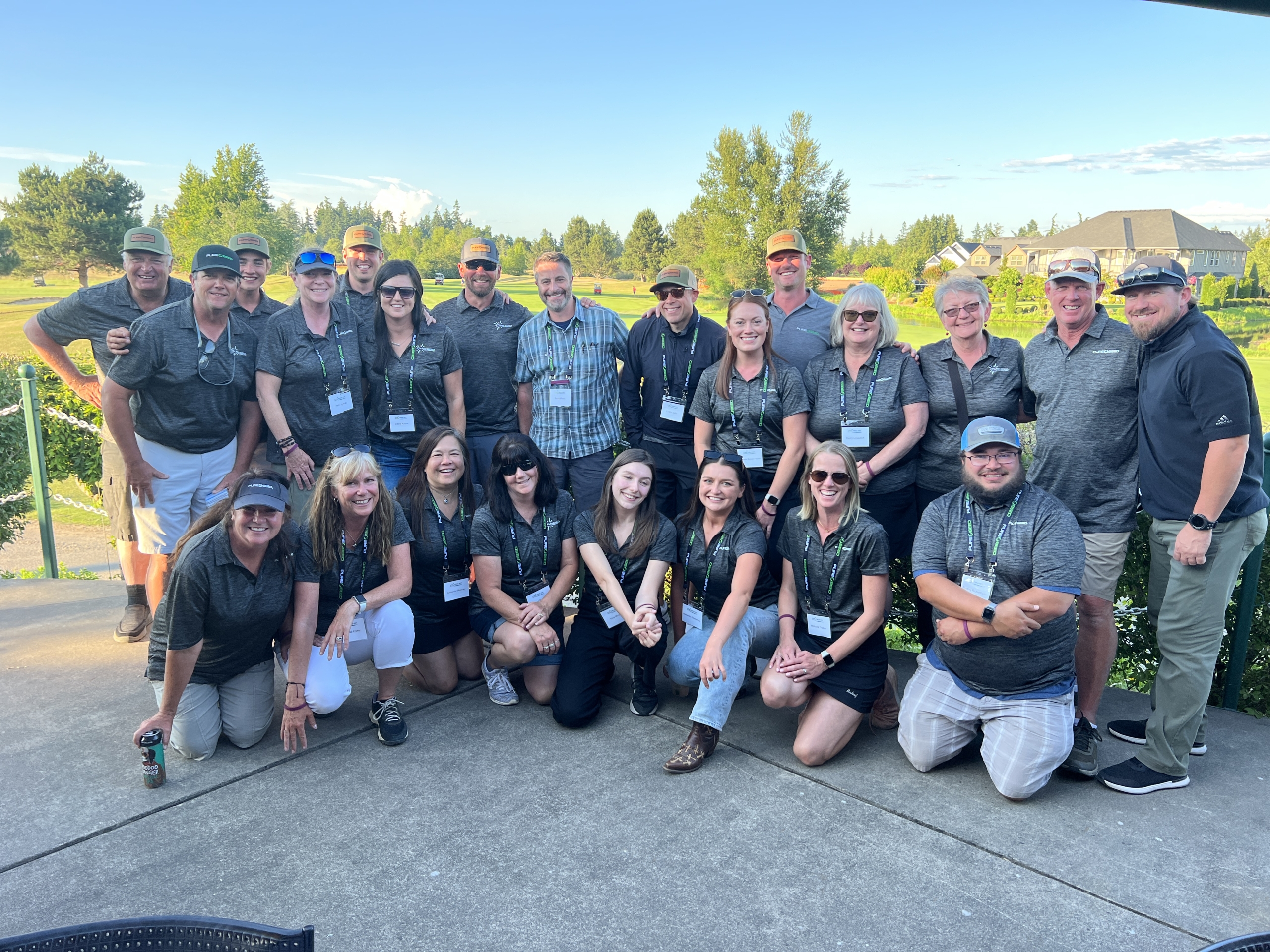
Being part of the Oregon Seed Association gives members the chance to come together and strengthen their industry, Rose-Fricker said. Even though they are technically competitors, she said they are stronger as a group when it comes to advocating for legislation and support that helps everyone along the supply chain.

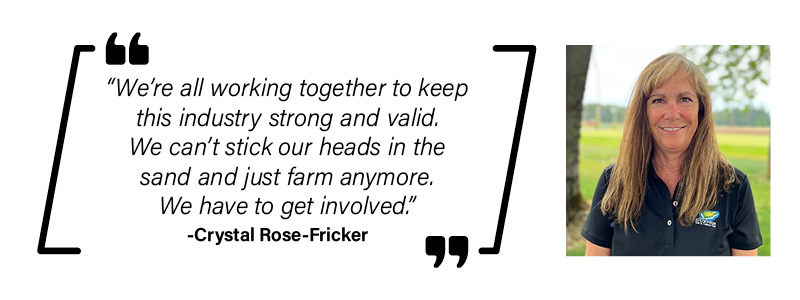
“We’re all working together to keep this industry strong and valid,” she said. “We can’t stick our heads in the sand and just farm anymore. We have to get involved.”


That means making sure they tell the industry’s story, and explaining how companies like Pure Seed are cultivating better seed varieties that give all the benefits of natural grass while being more environmentally friendly — requiring less water and chemical inputs.


“People want to have a beautiful green landscape, but they don’t want to feel guilty about it,” Rose-Fricker said.


The next generation


Pure Seed also volunteers with Oregon Aglink’s Adopt-A-Farmer program, which pairs farmers with middle school classrooms for field trips and agricultural-themed lessons. This year, Rose-Fricker said the farm in Canby will welcome 200 kids from Sellwood Middle School in Portland.


For some kids, it might be the first time they’ve ever been on a farm or seen a tractor, Rose-Fricker said. The program aims to show them that they could consider jobs in agriculture, no matter what they’re interested in doing.


“It’s really needed to give kids that experience,” she said. “Who knows what they’ll end up being in the future?”

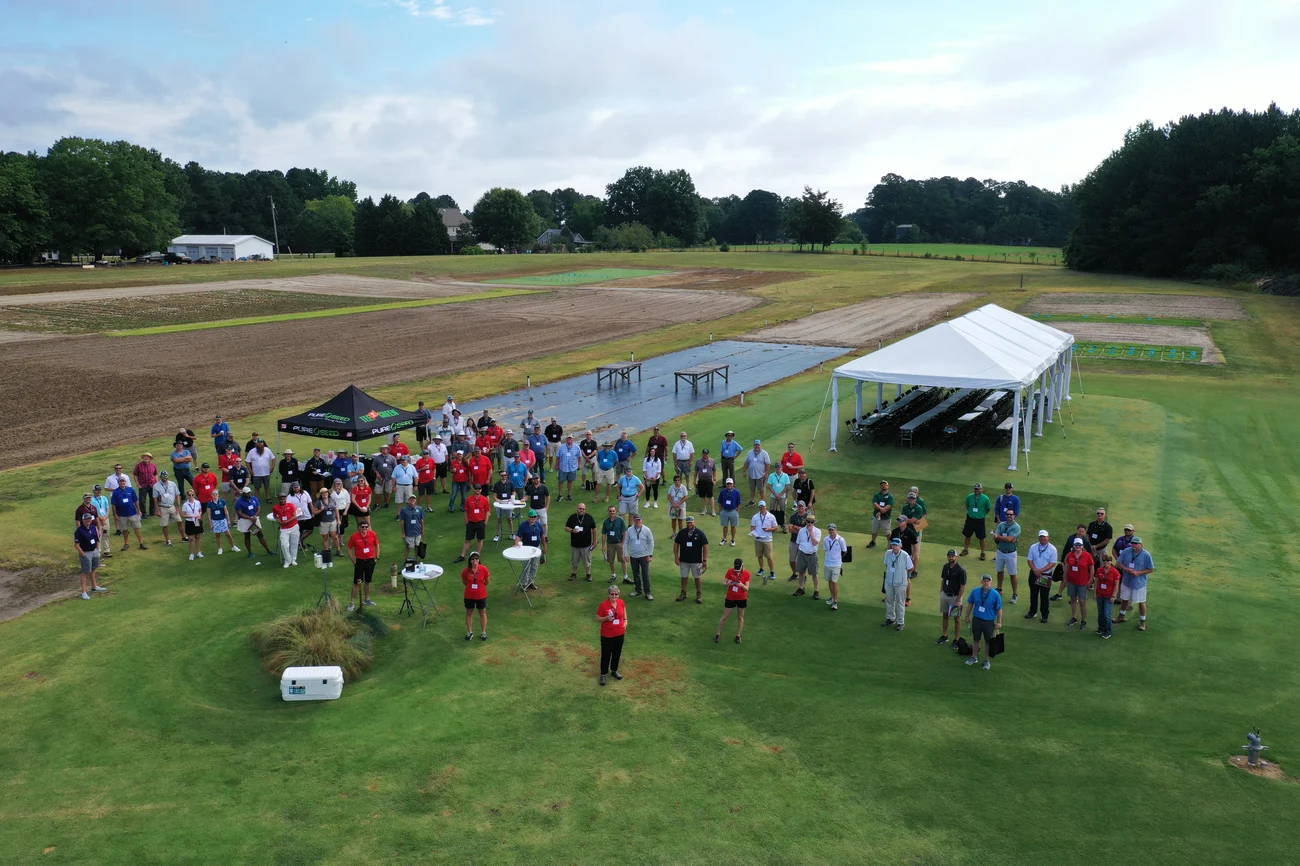
https://oregonseed.org/wp-content/uploads/2024/02/Pure-Seeds-Research-Farm-Rolesville-NC.webp 866 1300 George Plaven https://oregonseed.org/wp-content/uploads/2025/04/osa-logo.png George Plaven2024-02-26 09:00:222024-03-29 10:16:32Pure Seed Cultivates Varieties for the World
Page 1 of 212

Archive

  • September 2024 (2)
  • August 2024 (1)
  • July 2024 (1)
  • June 2024 (2)
  • April 2024 (1)
  • March 2024 (1)
  • February 2024 (1)
  • July 2023 (1)
  • April 2023 (1)
  • December 2022 (1)
  • November 2022 (2)
  • June 2022 (1)
  • March 2022 (1)
  • February 2022 (1)
  • September 2021 (2)
  • August 2021 (2)
  • July 2021 (2)
  • May 2021 (3)
  • March 2021 (3)
  • February 2021 (1)
  • November 2020 (1)
  • September 2020 (1)
  • August 2020 (1)
  • July 2020 (2)
  • June 2020 (1)
  • December 2019 (1)
  • October 2019 (1)
  • July 2019 (1)
  • May 2019 (2)
  • March 2019 (1)
  • December 2018 (1)
  • August 2018 (1)
  • January 2018 (1)
  • October 2017 (1)
  • September 2017 (1)
  • August 2017 (4)
  • June 2017 (3)
  • May 2017 (1)
  • April 2017 (1)
  • March 2017 (1)
  • February 2017 (1)
  • October 2016 (2)
  • August 2016 (2)
  • June 2016 (2)
  • May 2016 (2)
  • March 2016 (2)
  • January 2016 (1)
  • December 2015 (3)
  • November 2015 (1)
  • October 2015 (1)
  • September 2015 (3)
  • August 2015 (1)
  • July 2015 (6)
  • June 2015 (2)
  • May 2015 (5)
  • April 2015 (4)
  • March 2015 (3)
  • February 2015 (4)
  • January 2015 (3)
  • December 2014 (3)
  • November 2014 (1)
  • October 2014 (5)
  • September 2014 (1)
  • August 2014 (5)
  • July 2014 (4)
  • June 2014 (1)
  • May 2014 (2)
  • April 2014 (4)
  • March 2014 (3)
  • February 2014 (4)
  • January 2014 (7)
  • December 2013 (5)
  • November 2013 (2)
  • October 2013 (3)
  • September 2013 (5)
  • August 2013 (8)
  • July 2013 (5)
  • June 2013 (10)
  • May 2013 (7)
  • April 2013 (1)
  • March 2013 (2)
  • March 2012 (1)
  • June 2010 (1)
  • May 2010 (1)

New Members

  • Application
  • Bylaws
  • Antitrust Statement
  • Why Become a Member?

Contact

[email protected]
PO Box 262
Tangent, OR 97389

© Copyright - Oregon Seed Association | Privacy Policy
Scroll to top Scroll to top Scroll to top