Sharon Davidson shares the story behind Agri Seed Testing seed lab, the realities of seed testing, and why partnership with OSA has made a difference.
For more than four decades, Agri Seed Testing has played an important role in Oregon’s seed industry. By providing detailed, accurate analysis, testing their work supports seed quality standards, ensures that grower-company contract specs are met, and guides the best use of individual seed lots before they enter the marketplace.
Founded in May of 1983 by Sharon Davidson, RST, Agri Seed Testing specializes in agricultural seed testing services, including purity, germination, tetrazolium, ploidy, and other quality characteristics.
 Davidson’s path to ownership began after earning her Registered Seed Technologist (RST) status while working in Arizona. Encouraged by her father to return home to Oregon, she launched Agri Seed Testing with family support and initially operated as a wholly owned subsidiary of RD Farms. She began in a 1,000-square-foot leased space. Within seven years, she purchased and renovated her first building into a dedicated seed lab. A decade later, continued growth led to the addition of a second facility, bringing the operation to a total of 7,000 square feet.
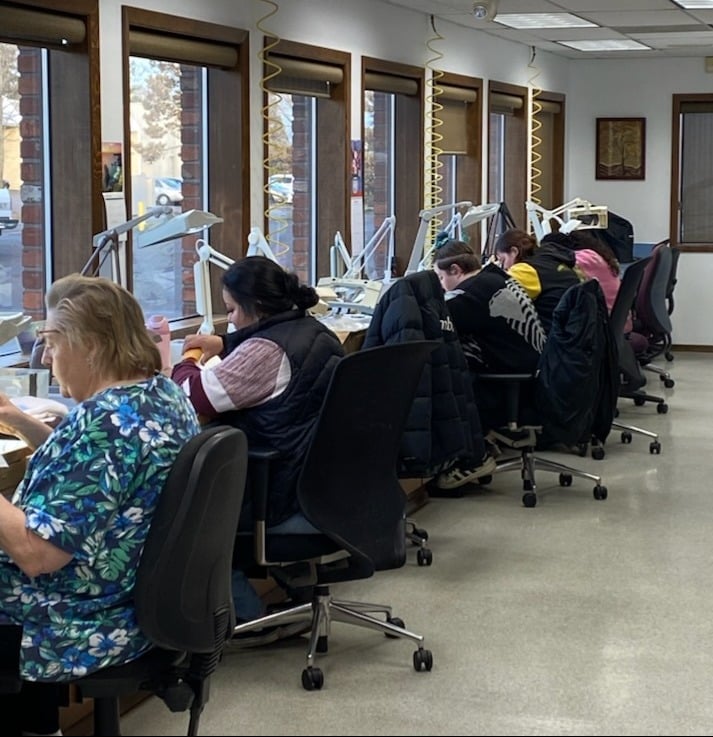
While many people assume seed testing is automated, the work remains highly hands-on. Each seed in a purity test is examined individually. Each sprout in a germination test is evaluated by a trained analyst. The lab’s report of analysis is often the deciding document in buying, selling, and shipping seed, so accuracy is critical. Although seed testing may be one of the least compensated roles in the production chain, it produces one of the most important documents in any transaction.
Workforce development is one of the company’s biggest challenges today. The work is detailed and methodical, and it takes patience and a genuine passion for seeds. Hiring at high wages is not always possible, so finding and keeping employees who truly care about the work is essential. Davidson also notes that putting a RUSH on a test does not actually make results come faster; it just puts the lab further behind on other tests. Each evaluation takes time and attention, and quality cannot be compromised.
 Looking ahead, Davidson expects there may be fewer seed labs in the future. While artificial intelligence may assist with certain processes, she believes trained professionals will still be needed to evaluate final results. As the industry evolves, maintaining strong training and expertise will remain important.
Agri Seed Testing has been part of the Oregon Seed Association since before it was even called the OSA. As a Gold Sponsor and Associate Member, the company views its involvement as a true partnership. Over the years, the OSA’s support in addressing testing rules and seed law considerations has helped strengthen both the business and the broader seed community.
Reflecting on her career, Davidson describes it as a fabulous journey. From a farm girl in St. Paul to the founder of a respected seed lab, she credits the Oregon seed community and the OSA for believing in her vision and supporting the work that helps keep Oregon seed moving around the world.