• Member Login
  • Shopping Cart Shopping Cart
    0Shopping Cart
Oregon Seed Association
  • About Us
    • Members
    • Why Become a Member?
    • Officers & Board of Directors
    • Bylaws
    • Code of Ethics
  • Events
    • Events Calendar
    • Mid-Winter Meeting
    • Summer Convention
    • Cool Season Grass Workshop
  • Resources
    • OSA Seed Labeling Database
    • Seed Testing Labs
    • OSA Seed Lab Update
    • News
    • Legislative Reports
    • Palmer Amaranth
    • Industry Links
    • Commonly Used Acronyms
    • Stewardship Policy
  • Sponsors
  • Scholarship
    • Scholarship Award Recipients
  • Contact
  • Careers
    • Job Posts
    • Create a Job Post
    • Resume Posts
    • Create a Resume Post
  • Menu Menu
You are here: Home1 / ninja_forms_preview_page2 / 2013

Cover Crop Seed Growth

December 19, 2013

BY CINDY
AgWired —

With cover crops becoming increasingly important for farmers to provide nutrients and protect against erosion, different varieties are being developed to address specific needs.

At the American Seed Trade Association (ASTA) CSS & Seed Expo in Chicago, I learned more about that from Risa DeMasi with Grassland Oregon, who issecond vice chairman of ASTA. “Our company is very involved with cover crop research…working on sustainability issues for the soil and for the farmer,” she said. “Our mission is to provide novel solutions for growing concerns of the growers today.”

Risa says there are a number of different types of cover crops that are best for achieving specific goals, whether that is addressing soil erosion, soil compaction, water or nutrient management, wildlife habitat – or all of the above. One variety they are particularly excited about is Balansa clover. “It provides a great amount of nitrogen,” said Risa. “It also creates very deep channels in the soil, so you get water availability when you want it and drainage when you don’t. It’s creating a lot of top growth so you get weed suppression. It also can create an environment of habitat for certain wildlife.”

ASTA is becoming more involved in the educational aspect of cover crops for all stakeholders, from policy makers in Washington to the farmers on the ground. Learn more in this interview: Interview with Risa DeMasi, Grassland Oregon

Click here to read the original article in AgWired.

https://oregonseed.org/wp-content/uploads/2025/04/osa-logo.png 0 0 Admin https://oregonseed.org/wp-content/uploads/2025/04/osa-logo.png Admin2013-12-19 11:56:502013-12-19 14:05:25Cover Crop Seed Growth

Buzzing into Washington: The Bee Care Tour (Feb. 6, 2014)

December 19, 2013

Save the Date:

Washington State University
Thursday, Feb. 6, 2014
Compton Union Building
Junior Ballroom – 320
Pullman, WA  99163
10 a.m. – Noon

Click here for more information.

https://oregonseed.org/wp-content/uploads/2025/04/osa-logo.png 0 0 Admin https://oregonseed.org/wp-content/uploads/2025/04/osa-logo.png Admin2013-12-19 11:52:102013-12-19 11:52:10Buzzing into Washington: The Bee Care Tour (Feb. 6, 2014)

Buzzing into Oregon: The Bee Care Tour (Feb. 18, 2014)

December 19, 2013

Save the Date:

Oregon State Universtiy
Tuesday, Feb. 18, 2014
CH2M Hill Alumni Center
Cascade Ballroom
725 SW 26th Street
Corvallis, OR  97331
10 a.m. – Noon

Click here for more information.

https://oregonseed.org/wp-content/uploads/2025/04/osa-logo.png 0 0 Admin https://oregonseed.org/wp-content/uploads/2025/04/osa-logo.png Admin2013-12-19 11:46:152013-12-19 11:48:11Buzzing into Oregon: The Bee Care Tour (Feb. 18, 2014)

Young farmers cultivated through internship program

December 19, 2013

BY SERENA MARKSTROM
Bend Bulletin —

EUGENE — Jonny Steiger got a chance a few years ago to learn about farming and decide if it was the life for him through an Oregon program designed to “grow” a new crop of farmers to feed Americans.

“There’s a looming crisis in our farming community where there are not a lot of young people farming,” said Stu O’Neill, executive director of Rogue Farm Corps. “Young people aren’t growing up on the farm anymore.”

The average age of farmers in the United States was 57.1 in 2007, the most recent federal data available, said Bruce Pokarney, spokesman for the Oregon Department of Agriculture. The Oregon average — 57.5 — is slightly higher.

Rogue Farm Corps started its FarmsNext program to address the need for fostering a new generation of farmers and ranchers.

The program, which offers hands-on training and classes in sustainable agriculture for aspiring farmers and ranchers, has proven so promising that it has expanded to Lane County, with a South Willamette Valley chapter starting up. And it is getting requests to expand to other parts of the state.

Steiger, 33, decided after his internship that farming was indeed the life for him. He and his business partner, Tyson Fehrman, 30, today lease an 87-acre farm near Jacksonville and are themselves mentoring others through the FarmsNext program.

“We are training people who want to do what we are already doing,” Steiger said. “We’re training our own competitors.”

In Lane County, Organic Redneck in Leaburg, Berggren Farm near Walterville and Deck Family Farm in Junction City are all signing on to the nonprofit Rogue Farm Corps’ internship program. Each will host one or two unpaid students, who get training, a place to live and meals, as well as a $400 monthly stipend in exchange for their full-time labor.

Students in the program also can earn college credit for their internship, although enrollment in an institution of higher education is not a prerequisite of the program, which takes between 1,200 and 1,500 hours to complete, O’Neill said.

FarmsNext has a 2014 budget of about $120,000, O’Neill said, and is funded through a series of grants, private donations, tuition fees from students and membership fees from farmers.

Each student pays $1,500 in tuition. Farmers in the Rogue Valley pay $1,000 per year, O’Neill said, but first-year farms in Lane County will be subsidized by another nonprofit organization — Cascade Pacific, which is helping with the expansion into Lane County.

Cascade Pacific secured a $25,000 grant from the Meyer Memorial Trust that will cover a part-time employee, transportation costs for program instructors and a contract with Rogue Farm Corps, Cascade Pacific’s Jared Pruch said.

A Rogue Valley farms internship program has been around in some form since 2004, when it started off informally, O’Neill said.

“In 2010 we hit a point of change,” he said. “It became apparent the informal nature of it was running up against the realities of labor laws.”

The program unintentionally broke labor laws in such areas as paying hourly wages and carrying workers compensation insurance, he said. So organizers worked with state agencies to come up with the model it now uses.

Click here to read the original story from the Bend Bulletin.

https://oregonseed.org/wp-content/uploads/2025/04/osa-logo.png 0 0 Admin https://oregonseed.org/wp-content/uploads/2025/04/osa-logo.png Admin2013-12-19 11:33:422013-12-19 11:34:08Young farmers cultivated through internship program

Oregon ag an economic powerhouse, report finds

December 5, 2013

BY ERIC MORTENSON
Capital Press — 

Report says Oregon’s “agri-cluster” accounts for 15 percent of the state’s economic activity.

Agriculture is Oregon’s second-largest industry, and one in eight Oregonians work on farms or ranches or in businesses linked to them. The processing, shipping and distribution plants, joined by equipment dealers, supply stores, restaurants and food service companies, churn $5.48 billion worth of farm and ranch products into $22 billion in goods and services annually. That’s 15 percent of Oregon’s economic activity.

Those statistics and others are compiled in a new report from the land-use advocacy group 1000 Friends of Oregon, which hopes legislators and policy makers will recognize the economic impact of what it calls the state’s “agri-cluster.”

“We want them to connect the dots,” said Steve McCoy, farm and forest staff attorney with the Portland-based group.

The report, written by intern Arturo Romo and titled, “Great & Growing: People and Jobs in Oregon’s Agri-Cluster,” assembles data to make the case that Oregon agriculture is an economic powerhouse in every corner of the state.

Jobs and products associated with Oregon ag are surprisingly stable, and can’t be easily outsourced. In the depths of the 2007-2012 recession, when the state’s total employment dropped 5.3 percent and other kinds of manufacturing jobs declined 15.8 percent, food processing jobs in Oregon increased 7.8 percent, according to the report.

Eighty percent of what Oregon grows leaves the state. and half of that goes overseas. Compared to Midwest competitors, Oregon farmers stand at the doorstep of Asia’s vibrant economies, and engage in brisk trade with China, Japan, South Korea, the Philippines, Taiwan, Hong Kong and Indonesia. One Willamette Valley potato grower has been on three trade missions to Vietnam in the past two years.

Oregon’s crop diversity cushions economic downturns, according to the report. A bad corn market might devastate Iowa, where 45 percent of its farm acreage is planted to corn. But Oregon produces 220 crops and leads the nation in production of 14, ranging from blackberries to Christmas trees and hazelnuts to carrot seed.

Farming’s just a rural concern? Hardly. Five of the top 10 agricultural counties are considered “urban” by the U.S. Census. Marion County, home of the state capital, Salem, is first in Oregon ag sales. Clackamas County, just outside Portland, is fifth. Washington County, also a Portland neighbor and better known for Intel, Nike and high-tech, is seventh. By volume, farm products make up 60 percent of the goods shipped from the Port of Portland.

McCoy, the 1000 Friends of Oregon staff attorney, says agriculture’s economic impact is often overlooked. And in the group’s view, it is Oregon’s land-use laws — originally enacted to prevent cities from sprawling onto farmland — that make agriculture’s success possible.

“It’s important to point that out from time to time,” McCoy said. “The reason we have an agricultural economy is because of SB 100 (Senate Bill 100, the 1973 law that required statewide planning).”

The report concludes there is work to be done to keep farming viable. The state must continue to shelter farmland from develop, support a new generation of farmers and improve its water and transportation infrastructure in order for agriculture to thrive.

The report is available at the group’s website, www.friends.org/growing.

Click here for the original article in the Capital Press.

https://oregonseed.org/wp-content/uploads/2025/04/osa-logo.png 0 0 Admin https://oregonseed.org/wp-content/uploads/2025/04/osa-logo.png Admin2013-12-05 11:32:172013-12-05 11:32:17Oregon ag an economic powerhouse, report finds

Washington voters soundly reject I-522

November 6, 2013

FOR IMMEDIATE RELEASE
November 5, 2013 —

Vote defeats misleading food labeling proposal in Washington state

SEATTLE – The No on 522 campaign claimed victory tonight as Washington voters soundly rejected Initiative 522, the badly written and costly food labeling initiative on the November statewide ballot.

I-522 was brought to the Washington state ballot this year by anti-GMO activists as part of a self-proclaimed national agenda to ban foods derived from genetically engineered crops.  The initiative was opposed by a broad coalition of family farmers, scientists, doctors, consumers and businesses from across the state.

With almost one million votes counted, at least one media outlet has announced that Initiative 522 has been defeated. At the time of that announcement the vote was 55% favoring NO.

“This is a clear victory for Washington consumers, taxpayers and family farmers across our state,” said Dana Bieber, spokesperson for No on 522, in a statement Tuesday evening. “Washington voters have soundly rejected this badly written and deceptive initiative.”

I-522 would have provided consumers with inaccurate and misleading information about the foods they buy, while increasing grocery costs to working families by hundreds of dollars per year. And it would have burdened family farmers with costly new regulations and red tape, and exposed them to shake-down, bounty hunter law suits

“With Washington voters, it always comes down to the facts.  And the facts showed that I-522 was a badly written initiative that deserved to be rejected,” said Bieber.

The No on I-522 campaign extends its sincere thank you to the efforts and support of thousands of its coalition members from across our state who spoke out against I-522 as part of our campaign.

More information about I-522 can be found www.FactsAbout522.com

Brad Harwood
(206) 201-119
[email protected]


###

https://oregonseed.org/wp-content/uploads/2025/04/osa-logo.png 0 0 Admin https://oregonseed.org/wp-content/uploads/2025/04/osa-logo.png Admin2013-11-06 14:50:572013-11-06 14:52:41Washington voters soundly reject I-522

DLF Group: Grass Seed Supplier for World Cup 2014 in Brazil

November 1, 2013

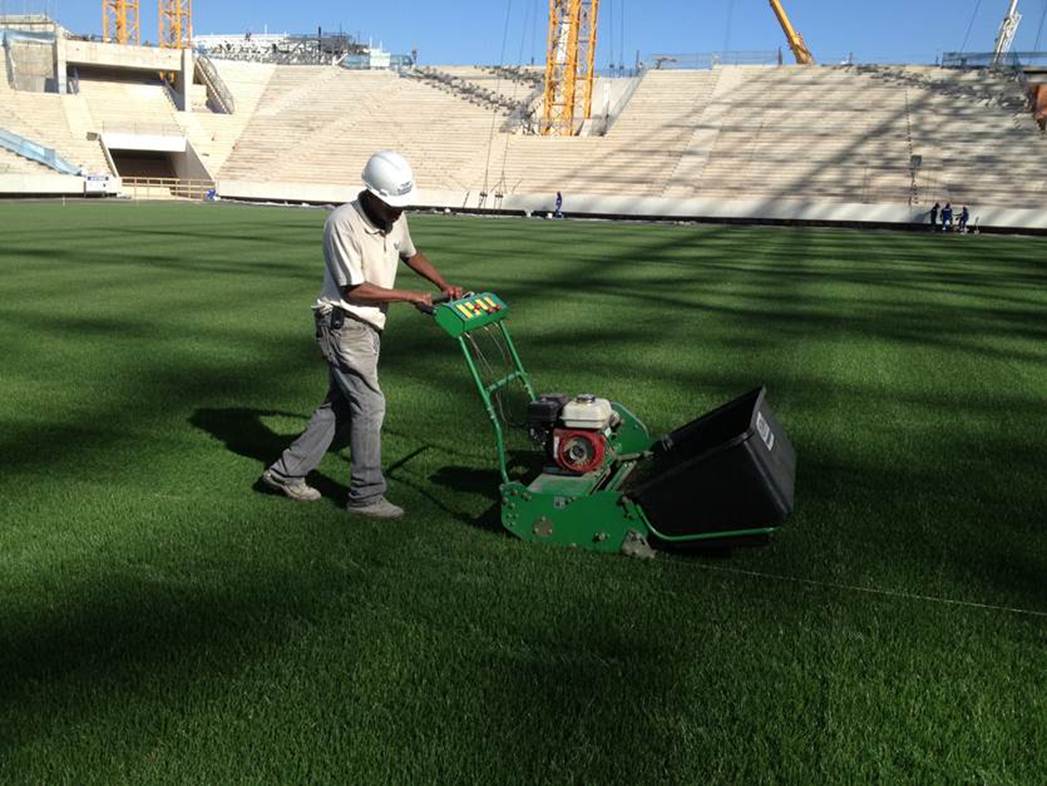
The preparations and construction for next year’s major soccer event in Brazil include choosing the right grass for the fields. The DLF Group has once again been chosen to supply grass seed for all of the World Cup stadiums and training facilities due to the success of the stadiums in South Africa, 2010 and DLF’s premium grass seed innovation and technology.

Innovative grass solutions for the ultimate playing surface
Billions of soccer enthusiasts will follow the major event in Brazil in June and July. The best national soccer teams in the world will do their utmost to perform with excellence on the natural sport surfaces, so the quality of the fields is critical.

The grass for the 12 World Cup stadiums is supplied to World Sports & Marketing and Green Leaf, the two Brazilian turf contractors who are currently renovating and/or rebuilding all the stadiums. CEO Roberto Gomide from World Sports & Marketing states, “The DLF grass for the World Cup has that unique technical quality and visible features that will create the ultimate playing surface needed for the World Cup in Brazil. I feel confident that the fields will be outstanding.”

Proven concept tested by specialists
The grass seed chosen for the World Cup 2014 has been tested thoroughly in Brazil by both international advisors as well as local sports grass specialists. The fields are generally Bermuda grass based, but due to the winter dormancy of Bermuda grass, the fields need to be reinforced with temperate sports turfgrass to provide the perfect playing surface during the tournament. To meet this requirement, the fields are overseeded with DLF’s top quality PhD® perennial ryegrass blend, a proven performer (often used for the US Superbowl).

Stadiums challenge the grass quality
The 12 stadiums hosting the World Cup are impressive, but the hard wear and the growth conditions put a lot of pressure on the stadium turf. These challenges are met by the durable turfgrass chosen for this major event. PhD® has been and will continue to be a proven performer under the special climate and intense wear conditions expected for the World Cup.

For more information contact: Rick Myers, VP Turf & Retail for DLF-IS at 1.800.445.2251.

Click here to view the press release issued 10/21/13.

https://oregonseed.org/wp-content/uploads/2013/11/DLF-World-Cup.jpg 786 1047 Admin https://oregonseed.org/wp-content/uploads/2025/04/osa-logo.png Admin2013-11-01 12:21:422016-09-15 12:54:46DLF Group: Grass Seed Supplier for World Cup 2014 in Brazil

2013 OSU Turf Field Day Review

October 29, 2013

Beaver Turf News —

Thank you to those who were able to attend the 2013 OSU Turf Field Day at the Lewis-Brown Horticulture Farm in Corvallis, OR.

The event was a great success; we had over 100 visitors registered and raised more than $8,500 for the OSU Turfgrass Research and Extension Program.

We hosted 18 Field Stops, 7 Industry Booths, and 4 Equipment Exhibitors. New this year, the Industry Booths and Equipment Exhibitors will hopefully continue into the future with more added. Contact information for the 2013 Industry Booth and Equipment Exhibitors is available at the conclusion of this update.

Alec Kowalewski, Turfgrass Specialist leads a tour of field day attendees at the 2013 OSU Turf Field Day. Industry Booth and Equipment Exhibitors set up for the 2013 OSU Turf Field Day.

Alec Kowalewski, Turfgrass Specialist leads a tour of field day attendees at the 2013 OSU Turf Field Day. (left) Industry Booth and Equipment Exhibitors set up for the 2013 OSU Turf Field Day. (right)

We began the day with a quick OSU Turf Program History and Update presentation, followed by the Field Day, which was presented in an open house or open discussion format.  Presenters included Alec Kowalewski, Turfgrass Specialist,Brian McDonald, Research Assistant, Clint Mattox, Graduate Assistant, and Doug Voderberg, Graduate Student.

Field stop topics included, but were not limited to, fungicide rotations for Anthracnose management, moss control on putting greens, annual bluegrass control in creeping bentgrass and perennial ryegrass, and alternative grounds cover (eco-lawn) evaluations.  If you are interested in seeing the complete list of field stops presented at this event checkout the 2013 OSU Turf Field Proceedings.

OSU Turf Alumni and industry professionals discuss the latest trends and developments in Oregon’s turf and landscape industry. OSU Turf Alumni and industry professionals discuss the latest trends and developments in Oregon’s turf and landscape industry.

OSU Turf Alumni and industry professionals discuss the latest trends and developments in Oregon’s turf and landscape industry.

After the field day, lunch was served at the Lewis-Brown Farm, and then 13 foursomes traveled to Trysting Tree Golf Club to participate in a hard fought shamble in the afternoon.  The winning foursome included Roger Henderson, Doug Hubert, Joe Chavarria and Lyle Gibbs.  Golf Tee Sponsors (a $250 contribution) included NuFarm, Barenbrug USA, andColumbia Seeds.

Turf Day SponsorsTurf Day Sponsors

Turf Day Sponsors

I would also like to note that Brian McDonald, Research Assistant, OSU Turf, and Ryan Wyckoff, Superintendent, OGA Golf Course, both received the 2103 “OSU Turf Program Alumni and Friends Appreciation Award” for their efforts and contributions to the OSU Turf Program.

To see more pictures of the field day and golf outing click on 2013 OSU Turf Field, photos courtesy of Mr. David Phipps,GCSAA Field Staff – Northwest Regional Representative.

Finally, I would like to thank the following for their contributions to the 2013 OSU Turf Field Day…

Industry Booth Exhibitors ($250 contribution)

Company Contact
NuFarm Justin Horlacher
Target Specialty Products Robert DeAngelo
Bridgewell Resources Darren MacFarlane
Barenbrug USA John Rector
Dow AgroScience Vanelle Peterson
Wilbur Ellis Company John Westerdahl
Rainbird Mark Willcut

Equipment Exhibitors ($500 contribution)

Company Contact
Western Equipment Dist. Dick Bergeron
Rocky Mountain Turf Lud Kaftan
Baroness Richard Lavine

Field Day Donations

Company Contact
Target Specialty Products Robert DeAngelo
Bayer ES Chris Olsen
Lewis Seed Co Brad Dozler

Click here to read the original article from Beaver Turf News.

https://oregonseed.org/wp-content/uploads/2025/04/osa-logo.png 0 0 Admin https://oregonseed.org/wp-content/uploads/2025/04/osa-logo.png Admin2013-10-29 10:29:012013-10-29 10:29:012013 OSU Turf Field Day Review

ASTA Publishes 2011-2012 Annual Report

October 2, 2013

The American Seed Trade Association (ASTA) recently released its 2011-2012 annual report.

Click here to read the full report from ASTA.

https://oregonseed.org/wp-content/uploads/2025/04/osa-logo.png 0 0 Admin https://oregonseed.org/wp-content/uploads/2025/04/osa-logo.png Admin2013-10-02 12:07:522013-10-02 12:07:52ASTA Publishes 2011-2012 Annual Report

OSU Seed Lab Update, End of September, 2013

October 2, 2013

Read below for the September update from the Oregon State University Seed Lab — 

As the full swing of the summer season slows down, I’d like to report on the lab performance through the summer and look ahead to fall and next year.

Looking back at July, August and September:

  • We were able to provide timely services to all customers.
  • Purity turn around has been around 3-4 days (excluding weekends).
  • The new no-factoring rule streamlined the orchardgrass purity testing.
  • All tests were reported on the same day of completing the test.
  • Seeds were planted for germination tests the same day or next morning.
  • Early ending of germinations on ryegrasses streamlined the whole germination process.
  • Around 50% of perennial ryegrasses ended on first count in July, which progressed to over 70% by the end of September.
  • TZs were reported within 24-48 hours and ploidy within 7-9 days.

Looking ahead to the fall

  • Our goal is to maintain the turn-around time we achieved this summer.
  • We will continue pre-chilling all 2013 harvested grasses through December .
  • New data shows it is feasible to use the ISTA approach on multiple florets of tall fescue.  We will start showing data to industry groups and start a national referee.
  • Some species (i.e. Kentucky bluegrass, bermudagrass, and paspalum) show very slow and incomplete germination with current AOSA methods. We plan to start researching for more effective options.

Looking ahead to winter and spring

  • We will be organizing workshops to reach seed growers, cleaners, and dealers. Workshops will be held in February, March, and April. Please let us know if you have suggestions or specific needs.
  • We will be organizing seed schools on purity, germination, and TZ testing.
  • Breaking multiple florets in perennial ryegrass causes problems. We will start researching for alternatives. Options that can be explored are blowing procedure or ISTA approach. Please let us know of any suggestions.
  • As we enter spring of 2014, our focus will shift to preparations for the summer harvest of 2014.

We are here to help you succeed. Thank you for using the OSU Seed Lab. If there is any other way we can help you, please contact us immediately at: [email protected] or 541-737-4464.

Click here to read the original report from the OSU Seed Lab.

https://oregonseed.org/wp-content/uploads/2025/04/osa-logo.png 0 0 Admin https://oregonseed.org/wp-content/uploads/2025/04/osa-logo.png Admin2013-10-02 12:04:542013-10-02 12:10:53OSU Seed Lab Update, End of September, 2013
Page 1 of 512345

Archive

  • September 2024 (2)
  • August 2024 (1)
  • July 2024 (1)
  • June 2024 (2)
  • April 2024 (1)
  • March 2024 (1)
  • February 2024 (1)
  • July 2023 (1)
  • April 2023 (1)
  • December 2022 (1)
  • November 2022 (2)
  • June 2022 (1)
  • March 2022 (1)
  • February 2022 (1)
  • September 2021 (2)
  • August 2021 (2)
  • July 2021 (2)
  • May 2021 (3)
  • March 2021 (3)
  • February 2021 (1)
  • November 2020 (1)
  • September 2020 (1)
  • August 2020 (1)
  • July 2020 (2)
  • June 2020 (1)
  • December 2019 (1)
  • October 2019 (1)
  • July 2019 (1)
  • May 2019 (2)
  • March 2019 (1)
  • December 2018 (1)
  • August 2018 (1)
  • January 2018 (1)
  • October 2017 (1)
  • September 2017 (1)
  • August 2017 (4)
  • June 2017 (3)
  • May 2017 (1)
  • April 2017 (1)
  • March 2017 (1)
  • February 2017 (1)
  • October 2016 (2)
  • August 2016 (2)
  • June 2016 (2)
  • May 2016 (2)
  • March 2016 (2)
  • January 2016 (1)
  • December 2015 (3)
  • November 2015 (1)
  • October 2015 (1)
  • September 2015 (3)
  • August 2015 (1)
  • July 2015 (6)
  • June 2015 (2)
  • May 2015 (5)
  • April 2015 (4)
  • March 2015 (3)
  • February 2015 (4)
  • January 2015 (3)
  • December 2014 (3)
  • November 2014 (1)
  • October 2014 (5)
  • September 2014 (1)
  • August 2014 (5)
  • July 2014 (4)
  • June 2014 (1)
  • May 2014 (2)
  • April 2014 (4)
  • March 2014 (3)
  • February 2014 (4)
  • January 2014 (7)
  • December 2013 (5)
  • November 2013 (2)
  • October 2013 (3)
  • September 2013 (5)
  • August 2013 (8)
  • July 2013 (5)
  • June 2013 (10)
  • May 2013 (7)
  • April 2013 (1)
  • March 2013 (2)
  • March 2012 (1)
  • June 2010 (1)
  • May 2010 (1)

New Members

  • Application
  • Bylaws
  • Antitrust Statement
  • Why Become a Member?

Contact

[email protected]
PO Box 262
Tangent, OR 97389

© Copyright - Oregon Seed Association | Privacy Policy
Scroll to top Scroll to top Scroll to top