• Member Login
  • Shopping Cart Shopping Cart
    0Shopping Cart
Oregon Seed Association
  • About Us
    • Members
    • Why Become a Member?
    • Officers & Board of Directors
    • Bylaws
    • Code of Ethics
  • Events
    • Events Calendar
    • Mid-Winter Meeting
    • Summer Convention
    • Cool Season Grass Workshop
  • Resources
    • OSA Seed Labeling Database
    • Seed Testing Labs
    • OSA Seed Lab Update
    • News
    • Legislative Reports
    • Palmer Amaranth
    • Industry Links
    • Commonly Used Acronyms
    • Stewardship Policy
  • Sponsors
  • Scholarship
    • Scholarship Award Recipients
  • Contact
  • Careers
    • Job Posts
    • Create a Job Post
    • Resume Posts
    • Create a Resume Post
  • Menu Menu
You are here: Home1 / ninja_forms_preview_page2 / 20243 / September

Double River Forwarding Navigates Global Events to Deliver Seed For the World

September 25, 2024

As the owner of a small freight forwarding and logistics company based in Portland, Tina Lyons is always keeping a close eye on the news.

Global events can have a major impact on her clients and business. Lately, she’s been monitoring conflict in the Red Sea that has led to reduced ship traffic through the Suez Canal for fear of attacks. That means more vessels and more cargo are having to travel longer distances before reaching their final destination.

“It would be nice to take a news break, but I can’t,” said Lyons, of Double River Forwarding LLC.  “World peace would really help a lot.”
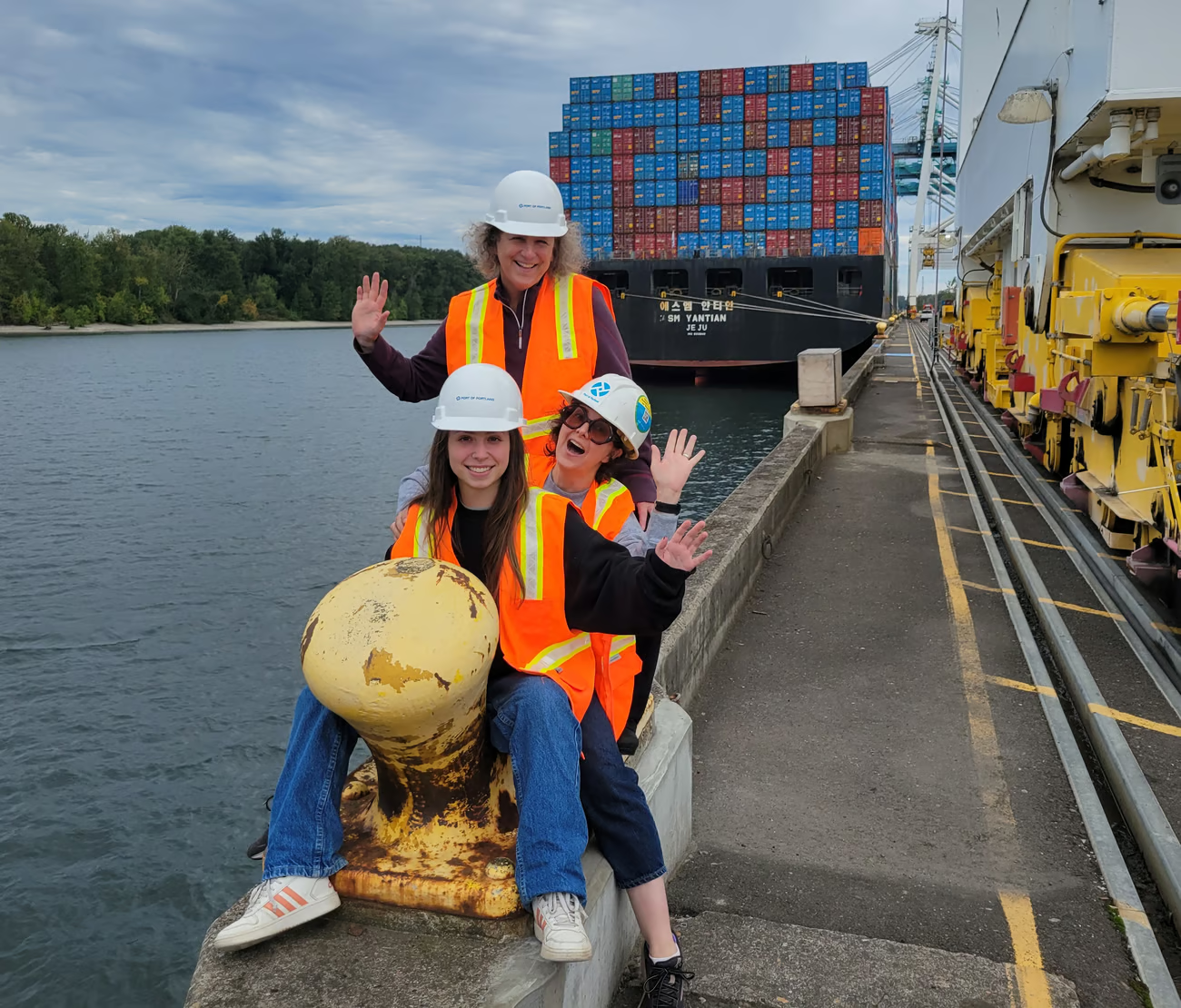
 

Tina Lyons, back, waves in front of a container vessel with employees Josephine Lyons and Jennifer Dawkins.


Lyons founded Double River in 2008. She previously spent 16 years in the commodity trading and freight forwarding industry before striking out on her own. The company’s name refers to the convergence of the Willamette and Columbia rivers in north Portland.

Double River specializes in shipping agricultural products around the world, including wheat, corn, hazelnuts, and grass seed. Lyons estimated as much as 90% of their clients are farmers. The company handles bookings with shippers, documentation, and other services to ensure these products get from Point A to Point B.

“I like to help people, and I like to make people happy,” Lyons said.

Export challenges

Lyons joined OSA as an associate member in 2020, right as the COVID-19 pandemic was beginning to cause major supply chain disruptions.

The biggest benefit, she said, has been developing close relationships with seed producers. Those connections have allowed her to learn more about the Oregon seed industry, and also share with OSA members what issues are affecting exports.

“Sometimes you have to explain broader issues as to why their cargo isn’t getting to (its destination),” Lyons said. “It can be really hard to explain that to people. Customers’ heads aren’t in this all day long. They’re just trying to sell their products.”

 

An ocean vessel loaded with containers. (Source: Wikipedia)


For example, Lyons said the COVID-19 pandemic threw shipping schedules into chaos. Bookings aboard vessels were difficult to find, and constantly changing. Even finding empty containers for exports was difficult — shipping lines were instead sending empty containers back to places like China to fill with higher-priced imports, essentially leaving exports behind with nowhere to go.

Things haven’t gotten much easier in the years since pandemic lockdowns. Russia’s invasion of Ukraine and the conflict in Gaza have altered shipping routes, leading to greater congestion at European ports. Ship traffic was also recently restricted through the Panama Canal due to drought, resulting in another bottleneck.

It is up to Lyons and her team to help customers navigate these complex challenges.

“It’s a big wheel,” she explained, “and the cogs aren’t all in the right place right now.”

A team approach

 Lyons has four employees at Double River, including two in their Portland office, one based in Roseburg, and one on the East Coast in Jersey City, N.J.

Together, they move approximately 4,000 forty-foot equivalent containers worth of cargo every year. A forty-foot equivalent container, or FEU, measures 40 feet long, 8 feet wide, and 8 feet tall. For all 4,000 FEUs, that adds up to about 100,000 metric tons of goods.

Oregon grass seed goes all over the world, Lyons said. She can take out a globe and start pointing to every country where Oregon seed is sold, beginning with Tasmania. By the time she gets to Egypt, people usually get the point, she said.

Shipping grass seed does come with its own set of unique challenges. Import restrictions tend to be higher, Lyons said, and testing requirements are more stringent.

Freight forwarding and logistics can be a stressful job, Lyons said, with all the uncertainty caused by factors outside of their control.

“Luckily, we have awesome customers,” she said. “It helps to ease everything.”

Interested in contacting Double River Forwarding LLC? Click here to learn more!
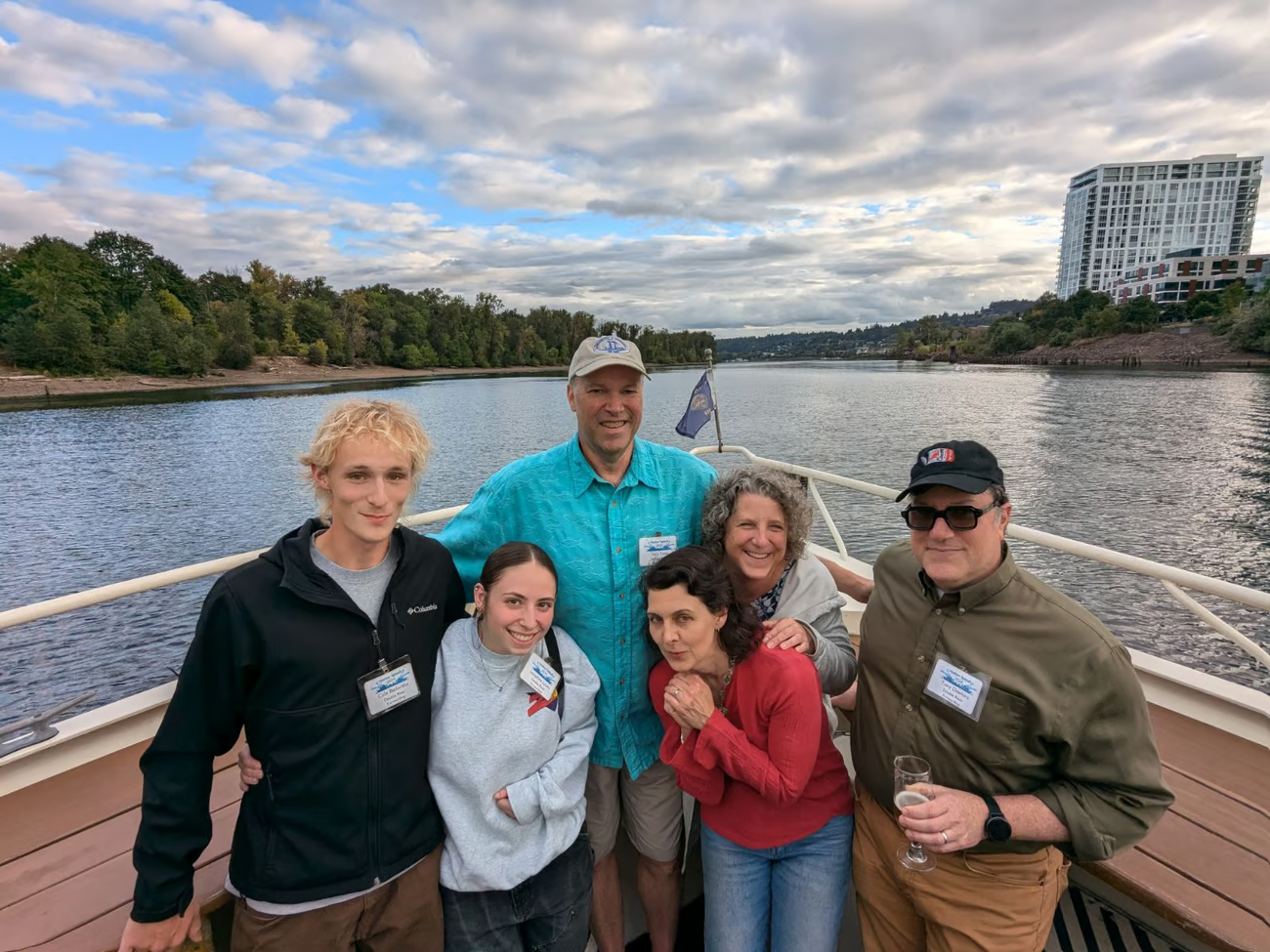
 

The Double River team — Tina Lyons, Jennifer Dawkins, and Josephine Lyons — gathered with their significant others. 

https://oregonseed.org/wp-content/uploads/2024/09/e3079c09-d65b-45e6-ad51-68fe501eeddf-1030x879-1.jpg 683 800 George Plaven https://oregonseed.org/wp-content/uploads/2025/04/osa-logo.png George Plaven2024-09-25 09:28:502025-04-21 18:27:31Double River Forwarding Navigates Global Events to Deliver Seed For the World

Turfgrass Field Day Digs Into Latest Research

September 5, 2024

Researchers at Oregon State University’s turf management program held their annual Turfgrass Field Day Aug. 29 at the Lewis-Brown Farm near Corvallis, providing updates on several projects related to pest control, winter injury, carbon sequestration, and more.

The morning began with a series of short presentations before moving to field tours and an open house, where attendees strolled past verdant putting greens, lush fescue trials, and could even glimpse tiny nematodes through a microscope.

Field tours included fungicide, herbicide, and irrigation efficiency studies, along with perennial ryegrass trials conducted with the National Turfgrass Evaluation Program (NTEP)  and fine fescue trials conducted as part of the Alliance of Low-Input Sustainable Turf.

Chas Schmid (right), senior researcher with the OSU BeaverTurf program, discusses topdressing treatments for golf course putting greens during the annual Turfgrass Field Day on Aug. 29.


Alumni and Friends


Two industry leaders were presented with Alumni and Friends awards from OSU BeaverTurf, recognizing their contributions to the turfgrass industry.

Sally Cheyne, Executive Director of the Oregon Turfgrass Foundation, and David Phipps, Northwest Field Staff Representative for the Golf Course Superintendents Association of America (GCSAA), were presented with the awards by Alec Kowalewski, Professor and turfgrass specialist for OSU.

OSA offers our congratulations to Cheyne and Phipps! Thank you for your incredible support of Oregon seed and turfgrass producers.

David Phipps and Sally Cheyne received Alumni and Friends awards from OSU BeaverTurf.


Diagnostic Lab Update


Chas Schmid, an assistant professor at OSU and senior researcher with the BeaverTurf program, gave an update on the university’s Turfgrass Diagnostic Lab.

Schmid said they are seeing an uptick in samples this summer with the diseases Pythium root rot and summer patch. Over-watering and over-fertilizing — particularly after periods of drought and going into hot weather — are a “recipe for disaster” for Pythium, he said.

The turfgrass team is also working with the U.S. Golf Association on a $30 million initiative to reduce water consumption by 45% over the next 15 years. As part of that effort, Schmid said they are experimenting with the height and angle of irrigation heads to see if they result in greater efficiency.

“Hopefully we’ll have some answers for you next year,” Schmid said.

Winter Damage


Two separate projects are underway at BeaverTurf examining winter damage at golf courses in Central Oregon, as well as damage caused by foot and cart traffic during frost.

Cole Stover, a graduate assistant at OSU, is leading the work in Central Oregon. For three years between 2021 and 2024, he flew a DJI Inspire 2 drone equipped with a multispectral camera and thermal sensor over four golf courses near Bend. Flyovers were done monthly from December 2021 through May 2024 to monitor winter damage.

The DJI Inspire 2 drone was used to survey winter damage on four golf courses near Bend.


Results showed that surface temperature data could be used to predict areas of turf damage in spring. Damage is more likely to occur at minus-8 degrees Celsius, Stover said.

Stover also suggested it may be best to leave snow in place rather than remove it on golf courses, unless there is a chance it could thaw and then re-freeze forming a layer of ice.

Alec Kowalewski, professor and turfgrass specialist with BeaverTurf, led tests last year to determine whether foot and cart traffic caused damage during frost on golf courses. According to his study, frost was observed each morning from Jan. 30 to Feb. 13.

Results of the study, funded by the USGA, showed foot traffic did not cause significant damage to annual bluegrass putting greens. However cart traffic did cause “unacceptable” damage on taller bentgrass fairways.

“If it is a frozen morning, you should not have carts on the golf course for the entire day,” Kowalewski said.

Nematode Surveys


Emily Braithwaite, a graduate assistant at OSU, said surveys are showing increasing concentrations of microscopic nematodes in turfgrass across the Pacific Northwest.

The parasitic worms are harmful because they feed on the roots of grass, causing damage.

“Nematodes are much more widespread than we initially thought,” Braithwaite said.

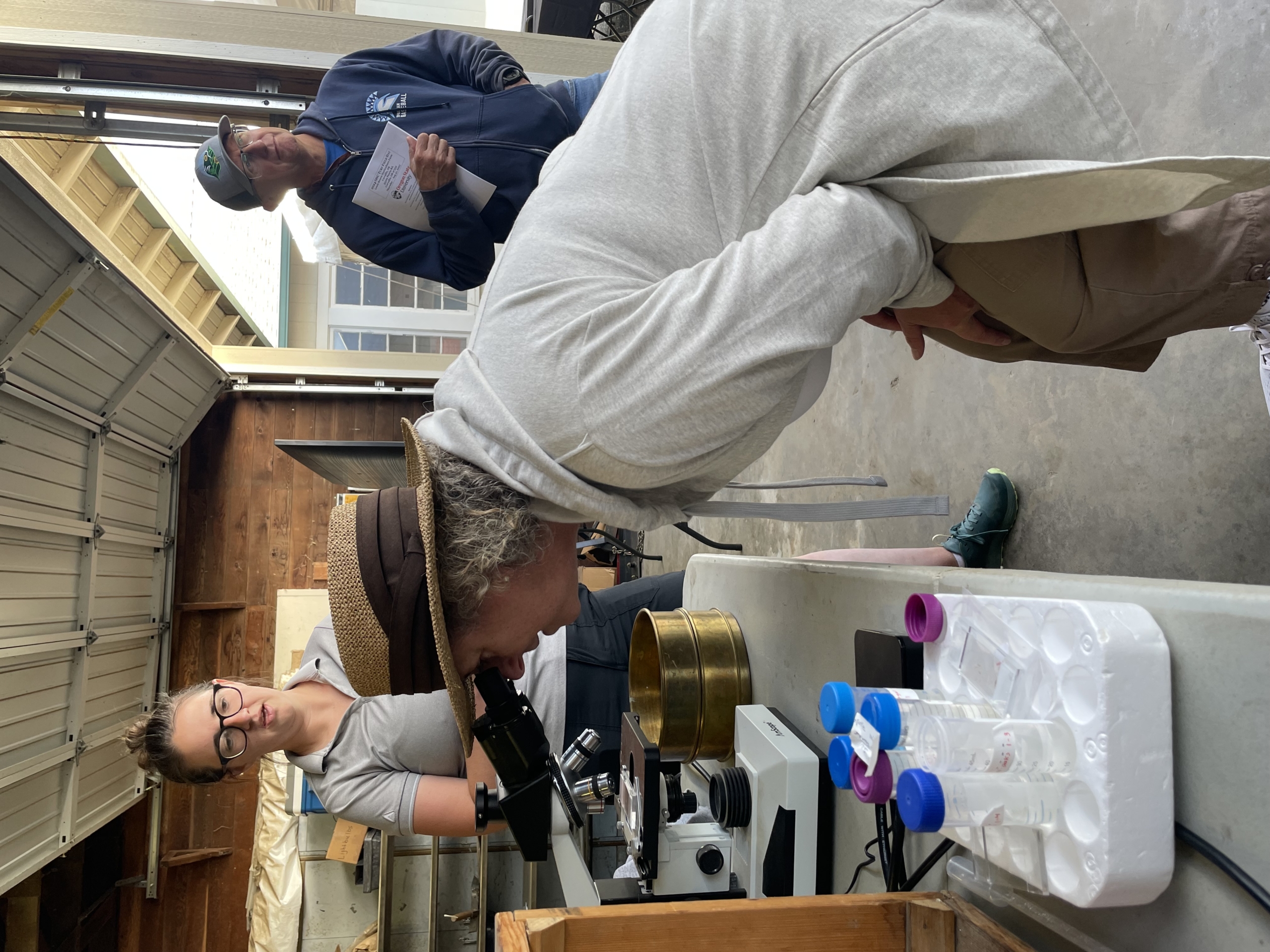
Tina Lyons, owner of Double River Forwarding in Portland, observes nematode samples through a microscope at OSU Turfgrass Field Day on Aug. 29.


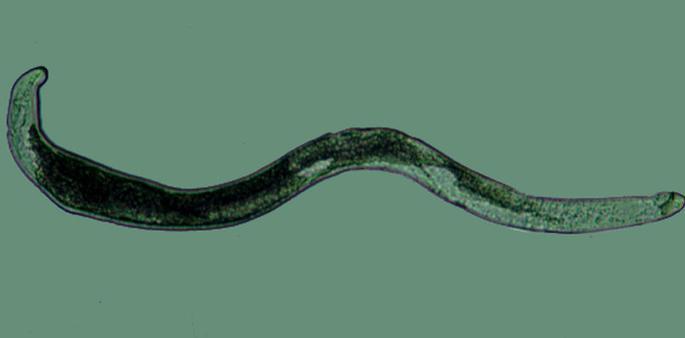
Example of a root-knot nematode. (Source: Center for Invasive Species and Ecosystem Health)


The survey, funded by the USGA, identified 15 unique types of nematodes in turfgrass, versus just 1-2 in crops such as soybeans. Damage was primarily observed from January through March, during periods of reduced growth.

Braithwaite said the next step is finding best management practices such as optimized spraying to keep the tiny parasites under control.

Carbon Sequestration

Zach Hamilton, a graduate assistant, discussed how grass length and frequency of mowing impacts the amount of carbon the plants are able to sequester.

Hamilton conducted research in a 40-year-old turfgrass stand at Lewis-Brown Farm, collecting data every two weeks from January 2021 through December 2022. He evaluated the photosynthesis of grass mowed at different lengths and intervals, including 5 centimeters monthly; 5 centimeters weekly; and 10 centimeters weekly.

Preliminary findings show the higher-cut grass sequestered more carbon, but with greater mowing frequency came greater carbon emissions, potentially offsetting the storage. Hamilton added that younger grass stands could have the ability to sequester more carbon underground.


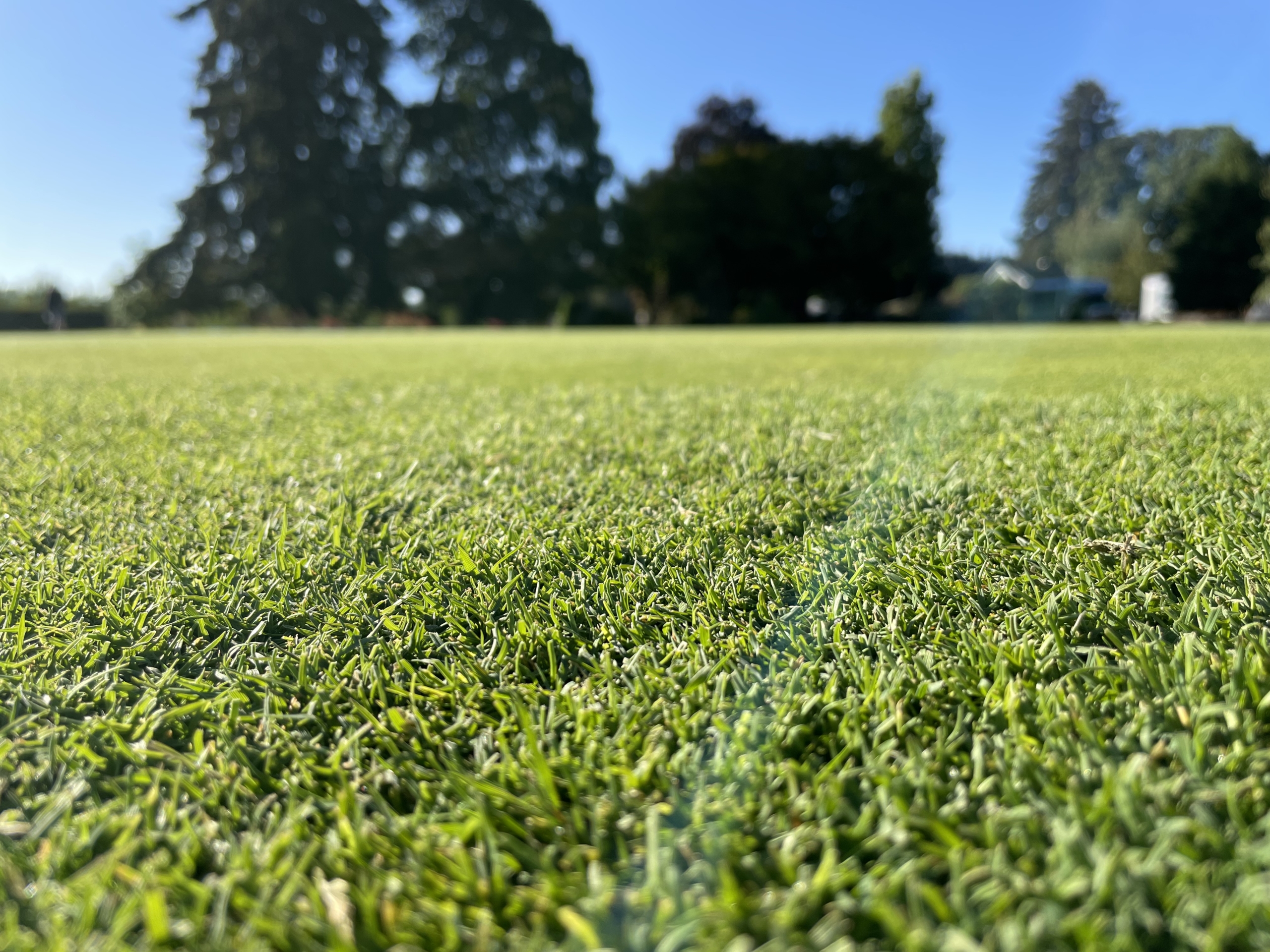
Sunlight shines on a putting green at Lewis-Brown Farm near Corvallis.

https://oregonseed.org/wp-content/uploads/2024/09/Schmid_tour-scaled.jpg 1920 2560 George Plaven https://oregonseed.org/wp-content/uploads/2025/04/osa-logo.png George Plaven2024-09-05 09:31:372026-02-27 12:01:19Turfgrass Field Day Digs Into Latest Research

Archive

  • September 2024 (2)
  • August 2024 (1)
  • July 2024 (1)
  • June 2024 (2)
  • April 2024 (1)
  • March 2024 (1)
  • February 2024 (1)
  • July 2023 (1)
  • April 2023 (1)
  • December 2022 (1)
  • November 2022 (2)
  • June 2022 (1)
  • March 2022 (1)
  • February 2022 (1)
  • September 2021 (2)
  • August 2021 (2)
  • July 2021 (2)
  • May 2021 (3)
  • March 2021 (3)
  • February 2021 (1)
  • November 2020 (1)
  • September 2020 (1)
  • August 2020 (1)
  • July 2020 (2)
  • June 2020 (1)
  • December 2019 (1)
  • October 2019 (1)
  • July 2019 (1)
  • May 2019 (2)
  • March 2019 (1)
  • December 2018 (1)
  • August 2018 (1)
  • January 2018 (1)
  • October 2017 (1)
  • September 2017 (1)
  • August 2017 (4)
  • June 2017 (3)
  • May 2017 (1)
  • April 2017 (1)
  • March 2017 (1)
  • February 2017 (1)
  • October 2016 (2)
  • August 2016 (2)
  • June 2016 (2)
  • May 2016 (2)
  • March 2016 (2)
  • January 2016 (1)
  • December 2015 (3)
  • November 2015 (1)
  • October 2015 (1)
  • September 2015 (3)
  • August 2015 (1)
  • July 2015 (6)
  • June 2015 (2)
  • May 2015 (5)
  • April 2015 (4)
  • March 2015 (3)
  • February 2015 (4)
  • January 2015 (3)
  • December 2014 (3)
  • November 2014 (1)
  • October 2014 (5)
  • September 2014 (1)
  • August 2014 (5)
  • July 2014 (4)
  • June 2014 (1)
  • May 2014 (2)
  • April 2014 (4)
  • March 2014 (3)
  • February 2014 (4)
  • January 2014 (7)
  • December 2013 (5)
  • November 2013 (2)
  • October 2013 (3)
  • September 2013 (5)
  • August 2013 (8)
  • July 2013 (5)
  • June 2013 (10)
  • May 2013 (7)
  • April 2013 (1)
  • March 2013 (2)
  • March 2012 (1)
  • June 2010 (1)
  • May 2010 (1)

New Members

  • Application
  • Bylaws
  • Antitrust Statement
  • Why Become a Member?

Contact

[email protected]
PO Box 262
Tangent, OR 97389

© Copyright - Oregon Seed Association | Privacy Policy
Scroll to top Scroll to top Scroll to top