• Member Login
  • Shopping Cart Shopping Cart
    0Shopping Cart
Oregon Seed Association
  • About Us
    • Members
    • Why Become a Member?
    • Officers & Board of Directors
    • Bylaws
    • Code of Ethics
  • Events
    • Events Calendar
    • Mid-Winter Meeting
    • Summer Convention
    • Cool Season Grass Workshop
  • Resources
    • OSA Seed Labeling Database
    • Seed Testing Labs
    • OSA Seed Lab Update
    • News
    • Legislative Reports
    • Palmer Amaranth
    • Industry Links
    • Commonly Used Acronyms
    • Stewardship Policy
  • Sponsors
  • Scholarship
    • Scholarship Award Recipients
  • Contact
  • Careers
    • Job Posts
    • Create a Job Post
    • Resume Posts
    • Create a Resume Post
  • Menu Menu
You are here: Home1 / ninja_forms_preview_page2 / 20143 / August

Oregon Ag Ranks Near The Top Nationally

August 26, 2014

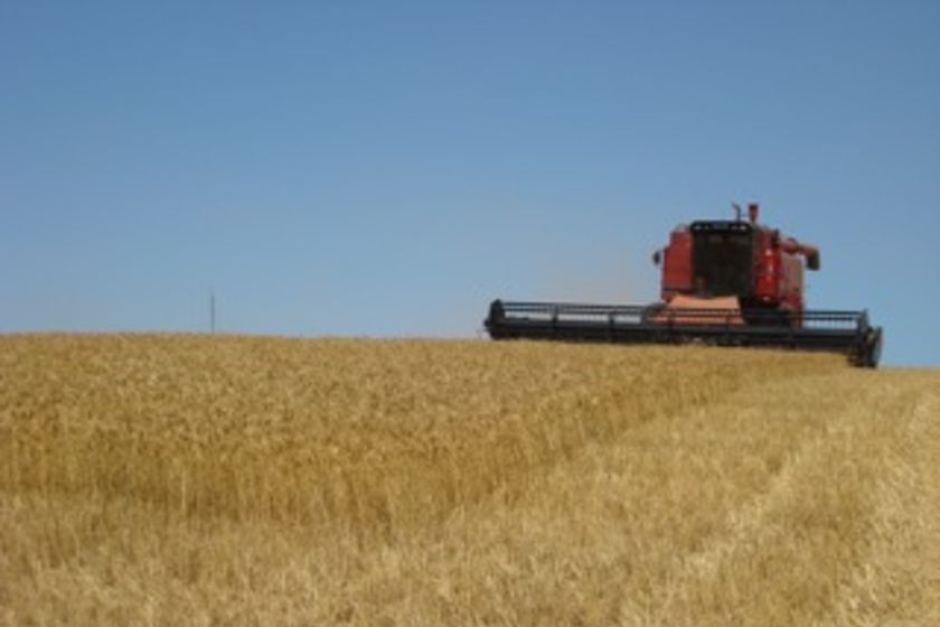
070814 Wheat HarvestSALEM, OR — The diversity of Oregon agriculture is on display, as several counties rank at or near the top nationally in the production of various crops and livestock.  While there are more than 3,000 counties nationally, the latest Census of Agriculture numbers show Oregon’s 36 counties stack up quite well in specific production.

“There are numbers here that show top 50 production for Willamette Valley counties, for Eastern Oregon counties, for Central Oregon counties, for coastal counties. Oregon has something to be proud of in terms of national rankings throughout the state.”

Land-use specialist Jim Johnson said some of the state’s counties actually lead the entire nation.

“Clackamas County is the number one Christmas tree county in the country. Hood River County, number one pear producer in the United States. Linn County, the grass seed capital of the world. Everybody has seen the billboard going down Interstate 5. The numbers reflect it, Linn County is the number one grass seed county in the country.”

The original article published on My Central Oregon can be found here. 

https://oregonseed.org/wp-content/uploads/2025/04/osa-logo.png 0 0 Admin https://oregonseed.org/wp-content/uploads/2025/04/osa-logo.png Admin2014-08-26 14:06:412014-08-26 14:06:41Oregon Ag Ranks Near The Top Nationally

Mid-Willamette Valley’s grass seed harvest delivers good but not stellar yields for farmers

August 13, 2014
Oregon Daily Life oregon grass seed harvest
A combine makes a final pass on a grass seed field west of Red Bridge Road southeast of Albany on July 31, 2014. (AP)
By The Associated Press

ALBANY — The grass seed harvest in the mid-Willamette Valley is wrapping up, and local farmers have begun combining wheat and clover fields.

Clare Sullivan, the new seed crops specialist in the Linn County office of the Oregon State University Extension Service, said most farmers she has talked to report a good — but not stellar — yields.

“I haven’t heard much grumbling about yields, so they must not be too bad,” Sullivan said.

Spotty rainfall two weeks ago affected harvest variably throughout the mid-valley.

“The southern part of the valley got about one-quarter of an inch, and it delayed harvest two or three days,” Sullivan said, “but some areas got a lot more rain, and farmers didn’t get back into the fields for a week.”

Yields seem to be average to slightly above average, Sullivan said.

Some wheat has already been harvested, Sullivan said.

“There was some concern the rain might cause sprout, but I was talking with a field rep and he hadn’t found any.”

Tangent area farmer Dennis Glaser said that his crews were wrapping up grass seed and had started on wheat and clover.

“Our tall fescue did reasonably well, probably a little better than I had anticipated after the dry June,” Glaser said. “There wasn’t a lot of ground moisture to carry crops through.”

Glaser said his perennial ryegrass yields are off about 20 percent from last year, in terms of bulk weight and he didn’t grow any annual ryegrass.

“The wheat looks good, probably about equal with last year, perhaps a little better,” he said. “I’m happy so far with the wheat.”

Wheat prices had been holding above $7 per bushel, but a bumper crop of corn in the Midwest has pushed the price of corn down to about $3.50 per bushel. Wheat prices follow corn prices and have dropped to about $6.75 in Portland.

“Everything’s predicated on corn yield and prices,” Glaser said of the global marketplace.

Nick Bowers farms near Harrisburg and is a partner in KB Seed Solutions.

grass seed oregon
Seed grass grows in an Oregon field in 2007.Tom Brandt/Flickr
“I’m finishing up grass seed today,” Bowers said Tuesday morning. “I have all annual ryegrass. The yields have been pretty good, but prices are down a bit. We hope yields balances out the price differences.”

Bowers said the recent rainfall’s effect on yields probably varied mostly based on soil types.

“Yields were probably hurt on the sandy, river bottom fields,” Bowers said.

Bowers said overall seed purchases appear to be a bit sluggish, but he says orders depend a great deal on weather patterns in the south and eastern portions of the country.

“Customers have also begun waiting because they know they can get orders within a week,” Bowers said. “They’re not ordering until they absolutely need it.”

Bowers said he plans to start harvesting clover today and says he never predicts clover yields until it’s in the bin.

“You just never know until you get it in,” he said.

Bruce Pokarney of the state Department of Agriculture said farmers in the northern parts of the valley finished their grass seed harvest at least two weeks ago and have begun burning stubble.

Although field burning was banned about five years ago for virtually all of the mid-valley, Pokarney said it remains allowed on about 15,000 acres in the north valley.

“Farmers will end up burning about 12,000 to 13,000 acres this year,” Pokarney said.

At its peak, mid-valley farmers burned 250,000 acres of grass seed stubble annually. In 1988, a multi-vehicle accident on Interstate 5 was caused in part by low visibility due to smoke and seven persons died. Over the next 10 years, the number of acres burned decreased to 65,000 acres and in 2009, field burning was banned except for a limited area in the northeastern area of the Willamette Valley, primarily in Marion County, on highly-erodible lands.

The original article published in The Register Guard on 8/9/14 can be found here.

https://oregonseed.org/wp-content/uploads/2025/04/osa-logo.png 0 0 Admin https://oregonseed.org/wp-content/uploads/2025/04/osa-logo.png Admin2014-08-13 10:18:172014-08-13 10:18:17Mid-Willamette Valley’s grass seed harvest delivers good but not stellar yields for farmers

Russia ban won’t hurt Oregon growers

August 13, 2014
Russia  Sanctions_Alle.jpg

By Colton Totland, Statesman Journal

Oregon will largely avoid repercussions of the one-year agriculture embargo imposed by Russia on Wednesday, despite being an important exporter of such goods in several countries across the world.

While the ban announced by Russian President Vladimir Putin ends roughly $1.6 billion in trade with the U.S., it affects just 1 percent of all American agriculture exports, and an even smaller percentage of exports from Oregon.

What’s more, the ban comes at a time of record agricultural exports for producers, according to the U.S. Department of Agriculture. A May report forecasts the U.S. — already the world’s largest provider of farm-related products — as exporting $149.5 billion in goods by the end of the fiscal year, a 6 percent increase over 2013.

The product most restricted by the embargo — poultry, which amounted to $300 million of the trade with Russia last year, according to the USDA — don’t come from Oregon. Agricultural producers in the state sent just $4.5 million in products to Russia in 2013, mostly pears, seeds and beef.

“Bottom line: Russia is not a very big customer of Oregon ag products at this time,” said Bruce Pokarney of the Oregon Department of Agriculture.

RELATED STORY: Show your ag love: Farmers market postage stamps

Oregon is a prominent trade partner in other parts of the world, however. The state exported $2.6 billion in goods in 2012, according to Business Oregon, about one-third of its overall production. Many of the state’s key trade partners, such as Japan, South Korea and nations in the South Pacific, rely on Oregon for their food production needs.

“There are so many markets around the world that are highly developed and yet resource poor,” said Allan Christian, a senior trade specialist with the U.S. Department of Commerce. Stationed in Portland, Christian works with Oregon agriculture businesses looking to export to international markets.

“These nations are reliant on imports for agricultural products to feed the population. They need everything from raw commodities to processed foods and beverages,” he said.

Several of those nations are long-standing trade partners of Oregon, Christian said, particularly Japan.

“Japan has been a well-developed business partner of Oregon for a very long time. You’re seeing the result of relationships that have developed over decades,” he said.

When it comes to the trade with Russia, Christian said it hardly registers.

“Undoubtedly, we’re exporting some there. But I’m just not aware of it,” he said.

For Christian, the bigger concern for Oregon trade is technology exports to Russia, namely processor giant Intel and medical equipment companies such as A-dec. He said while it wouldn’t be disastrous for Oregon manufacturers, an embargo on these goods by Russia could begin to impact the Oregon economy.

“Russia is not a crucial trade partner for Oregon in any area, but still — if they do broaden the embargo — that could begin to affect Oregon more seriously,” Christian said.

The original article published in The Register Guard on 8/8/14 can be found here. 

https://oregonseed.org/wp-content/uploads/2025/04/osa-logo.png 0 0 Admin https://oregonseed.org/wp-content/uploads/2025/04/osa-logo.png Admin2014-08-13 10:14:592014-08-13 10:15:33Russia ban won’t hurt Oregon growers

Grass seed harvest looks good

August 7, 2014

ALBANY — The grass seed harvest in the mid-Willamette Valley is wrapping up, and local farmers have begun combining wheat and clover fields.

Clare Sullivan, the new seed crops specialist in the Linn County office of the OSU Extension Service, said most farmers she has talked to report a good — but not stellar — yields.

“I haven’t heard much grumbling about yields, so they must not be too bad,” Sullivan said.

Spotty rainfall two weeks ago affected harvest variably throughout the mid-valley.

“The southern part of the valley got about one-quarter of an inch, and it delayed harvest two or three days,” Sullivan said. “But some areas got a lot more rain, and farmers didn’t get back into the fields for a week.”

Yields seem to be average to slightly above average, Sullivan said.

Some wheat has already been harvested, Sullivan said.

“There was some concern the rain might cause sprout, but I was talking with a field rep and he hadn’t found any.”

Tangent area farmer Dennis Glaser said that his crews were wrapping up grass seed and had started on wheat and clover.

“Our tall fescue did reasonably well, probably a little better than I had anticipated after the dry June,” Glaser said. “There wasn’t a lot of ground moisture to carry crops through.”

Glaser said his perennial ryegrass yields are off about 20 percent from last year, in terms of bulk weight, and he didn’t grow any annual ryegrass.

“The wheat looks good, probably about equal with last year, perhaps a little better,” he said. “I’m happy so far with the wheat.”

Wheat prices had been holding above $7 per bushel, but a bumper crop of corn in the Midwest has pushed the price of corn down to about $3.50 per bushel. Wheat prices follow corn prices and have dropped to about $6.75 in Portland.

“Everything’s predicated on corn yield and prices,” Glaser said of the global marketplace.

Nick Bowers farms near Harris­burg and is a partner in KB Seed Solutions.

“I’m finishing up grass seed today,” Bowers said Tuesday morning. “I have all annual ryegrass. The yields have been pretty good, but prices are down a bit. We hope yields balances out the price differences.”

Bowers said the recent rainfall’s effect on yields probably varied mostly based on soil types. “Yields were probably hurt on the sandy, river bottom fields,” he said.

Bowers said overall seed purchases appear to be a bit sluggish, but he says orders depend a great deal on weather patterns in the south and eastern portions of the country.

“Customers have also begun waiting because they know they can get orders within a week,” Bowers said. “They’re not ordering until they absolutely need it.”

Bowers said he planned to start harvesting clover this week and he never predicts clover yields until it’s in the bin. “You just never know until you get it in,” he said.

Bruce Pokarney of the state Department of Agriculture said farmers in the northern parts of the valley finished their grass seed harvest at least two weeks ago and have begun burning stubble.

Although field burning was banned about five years ago for virtually all of the mid-valley, Pokarney said it remains allowed on about 15,000 acres in the north valley. “Farmers will end up burning about 12,000 to 13,000 acres this year,” Pokarney said.

At its peak, mid-valley farmers burned 250,000 acres of grass seed stubble annually. In 1988, a multivehicle accident on Interstate 5 was caused in part by low visibility due to smoke and seven persons died. Over the next 10 years, the number of acres burned decreased to 65,000 acres and in 2009, field burning was banned except for a limited area in the northeastern area of the Willamette Valley, primarily in Marion County, on highly erodible lands.

The original article published in The Register Guard on 8/7/14 can be found here. 

https://oregonseed.org/wp-content/uploads/2025/04/osa-logo.png 0 0 Admin https://oregonseed.org/wp-content/uploads/2025/04/osa-logo.png Admin2014-08-07 14:02:452014-08-07 14:02:45Grass seed harvest looks good

Oregon grass seed harvest winds down

August 7, 2014

By Eric Mortenson
Capital Press

Oregon’s grass seed industry finds stability after some rocky years during the recession.

Oregon’s grass seed harvest will wrap up within the next week or so and appears on pace to continue the industry’s recovery after the recession slammed the housing market.

Roger Beyer, executive director of the Oregon Seed Council, said seed yield is average to slightly above average. Seed quality will be determined as the cleaning process begins.

Oregon leads the nation in production of multiple varieties of grass seed, which is used for lawns, parks, pastures and sports field. Grass seed was Oregon’s sixth most valuable commodity in 2012, worth about $411 million.

Farmers are harvesting about 129,000 acres of annual ryegrass this summer, up slightly from 2013. Perennial ryegrass acreage is 112,000 acres, tall fescue turf planting cover about 118,000 acres.

While the acreage planted in grass seed is significant, it has dropped from the days when Oregon farmers planted 180,000 to 190,000 acres in annual ryegrass alone. Demand for grass seed dropped when the recession hit in 2009, and has only recovered in the past couple years.

“The acreage will never get back to where it was because permanent replacement crops have gone in,” especially hazelnuts and blueberries, Beyer said.

Wheat and clover were planted in former grass seed fields during the lean years, but those are rotational crops which allow a return to grass seed, he said.

The original article published in Capital Press on 8/6/14 can be found here.

https://oregonseed.org/wp-content/uploads/2025/04/osa-logo.png 0 0 Admin https://oregonseed.org/wp-content/uploads/2025/04/osa-logo.png Admin2014-08-07 08:52:572014-08-07 08:52:57Oregon grass seed harvest winds down

Archive

  • September 2024 (2)
  • August 2024 (1)
  • July 2024 (1)
  • June 2024 (2)
  • April 2024 (1)
  • March 2024 (1)
  • February 2024 (1)
  • July 2023 (1)
  • April 2023 (1)
  • December 2022 (1)
  • November 2022 (2)
  • June 2022 (1)
  • March 2022 (1)
  • February 2022 (1)
  • September 2021 (2)
  • August 2021 (2)
  • July 2021 (2)
  • May 2021 (3)
  • March 2021 (3)
  • February 2021 (1)
  • November 2020 (1)
  • September 2020 (1)
  • August 2020 (1)
  • July 2020 (2)
  • June 2020 (1)
  • December 2019 (1)
  • October 2019 (1)
  • July 2019 (1)
  • May 2019 (2)
  • March 2019 (1)
  • December 2018 (1)
  • August 2018 (1)
  • January 2018 (1)
  • October 2017 (1)
  • September 2017 (1)
  • August 2017 (4)
  • June 2017 (3)
  • May 2017 (1)
  • April 2017 (1)
  • March 2017 (1)
  • February 2017 (1)
  • October 2016 (2)
  • August 2016 (2)
  • June 2016 (2)
  • May 2016 (2)
  • March 2016 (2)
  • January 2016 (1)
  • December 2015 (3)
  • November 2015 (1)
  • October 2015 (1)
  • September 2015 (3)
  • August 2015 (1)
  • July 2015 (6)
  • June 2015 (2)
  • May 2015 (5)
  • April 2015 (4)
  • March 2015 (3)
  • February 2015 (4)
  • January 2015 (3)
  • December 2014 (3)
  • November 2014 (1)
  • October 2014 (5)
  • September 2014 (1)
  • August 2014 (5)
  • July 2014 (4)
  • June 2014 (1)
  • May 2014 (2)
  • April 2014 (4)
  • March 2014 (3)
  • February 2014 (4)
  • January 2014 (7)
  • December 2013 (5)
  • November 2013 (2)
  • October 2013 (3)
  • September 2013 (5)
  • August 2013 (8)
  • July 2013 (5)
  • June 2013 (10)
  • May 2013 (7)
  • April 2013 (1)
  • March 2013 (2)
  • March 2012 (1)
  • June 2010 (1)
  • May 2010 (1)

New Members

  • Application
  • Bylaws
  • Antitrust Statement
  • Why Become a Member?

Contact

[email protected]
PO Box 262
Tangent, OR 97389

© Copyright - Oregon Seed Association | Privacy Policy
Scroll to top Scroll to top Scroll to top